
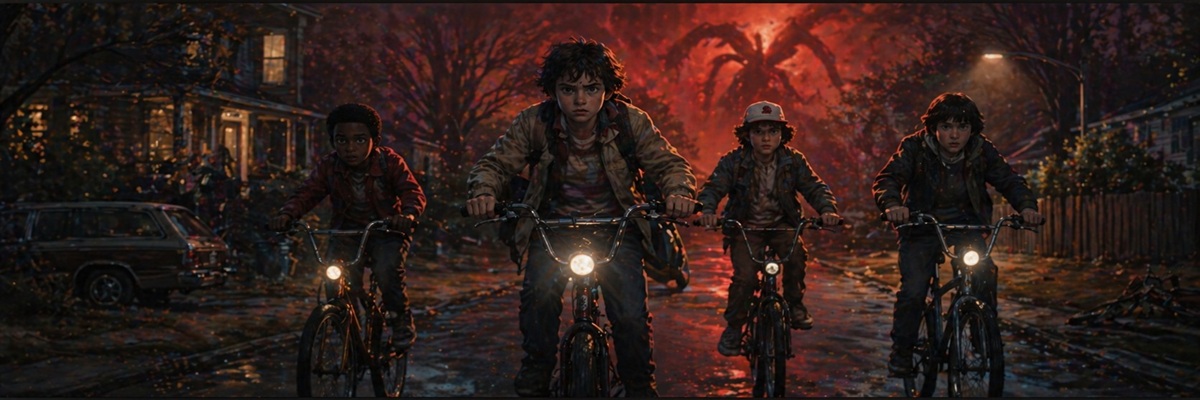
Netflix is continuing to build on the success of Stranger Things with Tales From ’85, an animated expansion that moves the franchise into new territory. Rather than extending the original storyline directly, the series introduces a fresh format, new characters, and a different style of storytelling.
This shift does more than broaden the universe. It changes how the story is told and places greater emphasis on voice performance, giving the new cast a central role in shaping how audiences experience this version of the franchise.
A New Format for a Familiar Franchise
Moving Stranger Things into animation represents a clear departure from the live-action format that defined its success. The original series built its identity through performances, practical effects, and a grounded approach to its supernatural elements. Animation allows for a different kind of flexibility.
In Tales From ’85, that flexibility shows up in pacing and visual style. Scenes can move more quickly, and the storytelling can take creative risks that would be harder to execute in live action. This opens the door to stories that expand the world without being tied to the limitations of the original cast or production style.
At the same time, the series still draws from the same core setting. The 1980s backdrop, the mix of mystery and supernatural elements, and the sense of a connected world remain intact. The difference lies in how those elements are presented.
This format shift also signals a broader strategy. Expanding a franchise through animation allows for new content without disrupting the main storyline, creating space for experimentation while maintaining the identity of the original series.
New Characters and Voice Cast Direction
With a new format comes a new cast of characters. Tales From ’85 introduces a younger group, shifting the focus away from the familiar faces that defined earlier seasons. This change allows the series to establish its own identity while still operating within the same universe.
In animation, voice acting becomes the primary way animated characters are defined. Without live-action performances, the voice carries tone, emotion, and personality. The success of the series depends heavily on how these performances are delivered.
Casting decisions reflect this shift. The actors chosen for these roles are not simply filling space within an existing franchise. They are responsible for creating a version of Stranger Things that feels distinct while still recognizable.
This creates a different kind of challenge. The new cast must connect with audiences who are already familiar with the world, while also introducing characters that stand on their own. Voice performance becomes the main tool for achieving that balance.
Balancing Nostalgia With New Storytelling
One of the central challenges for Tales From ’85 is maintaining the tone that made Stranger Things popular while introducing a new style of storytelling.
The original series leaned heavily on atmosphere. Slow-building tension, character-driven scenes, and a mix of horror and coming-of-age themes defined its approach. The animated format allows for faster pacing and more stylized sequences, which can shift that tone.
Early impressions suggest that this balance is not always consistent. Some elements capture the familiar feel of the franchise, while others move in a different direction. This is a natural outcome when a series transitions between formats.
Nostalgia remains a key factor. The 1980s setting, references to earlier events, and the overall world-building help anchor the series. At the same time, the new format requires a willingness to move beyond those expectations.
This tension between familiarity and change shapes how the series is received. It is not simply an extension of what came before, but an adaptation that reinterprets the same world through a different lens.
Reception and Early Critical Response
Initial reactions to Tales From ’85 reflect a mix of interest and caution. Expanding a well-established franchise always brings a level of expectation, particularly when the original series has a strong following.
Some responses highlight the potential of the animated format. The ability to explore new stories within the same universe is seen as a positive step, especially for a franchise that has already covered significant ground in its main storyline.
At the same time, there are concerns about tone and pacing. The differences between live action and animation are noticeable, and not all viewers respond to those changes in the same way. For some, the shift feels like a departure from what made the original series stand out.
This range of reactions is typical for franchise expansions. The success of a new format often depends on how well it establishes its own identity rather than relying entirely on what came before.
Expanding the Stranger Things Universe Through Voice and Animation
Animation allows Stranger Things to expand in ways that live action cannot. It removes constraints tied to actors’ schedules, physical production limits, and the need to align directly with the main storyline.
This expansion places voice acting at the center of the experience. Without on-screen performances, the voice becomes the primary connection between the character and the audience. Every line, pause, and shift in tone contributes to how the story is understood.
The move into animation also reflects a broader trend in franchise development. Established properties are increasingly exploring different formats to reach wider audiences and extend their lifespan. Voice actors play a key role in this process, carrying the identity of characters across new interpretations.
For Tales From ’85, this approach creates both opportunity and risk. It allows the series to explore new directions, but it also requires the voice cast to establish credibility within a well-known universe.
Tales From ’85 represents a significant step in the evolution of the Stranger Things franchise. By moving into animation, it opens the door to new stories, new characters, and a different style of storytelling.
Its success will depend on how well it balances these elements. The new cast, the voice performances, and the direction of the series all contribute to whether it stands as a meaningful addition or simply an extension.
What is clear is that the franchise is no longer limited to one format. As it continues to grow, voice acting will play an increasingly important role in defining how these stories are told and experienced.
