
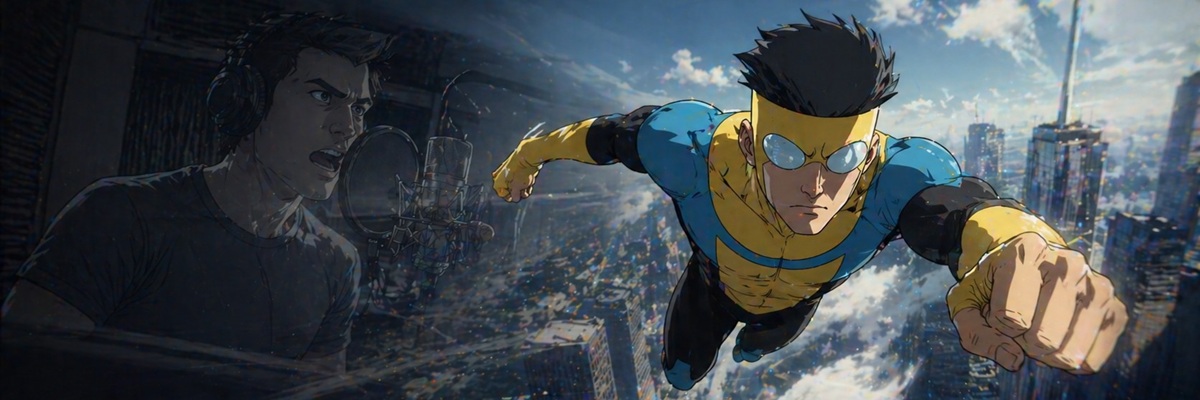
Aleks Le has confirmed his role as Mark Grayson in Invincible VS, adding another major credit to a career that has quickly expanded across anime, video games, and now Western animation. The casting places him at the center of one of the most recognized animated properties in recent years, while also tying into a broader conversation about how voice actors are chosen for high-profile roles.
As projects continue to grow in scale and visibility, casting decisions are drawing closer attention. Le’s latest role reflects both his rising presence in the industry and the ongoing discussion around how voice acting talent is selected.
Aleks Le’s Growing Presence Across Major Titles
Aleks Le has built momentum through a range of performances that span multiple parts of the industry. His work in Solo Leveling introduced him to a global anime audience, while additional roles in games and animation have expanded his reach.
This progression highlights a career path that is becoming more common. Voice actors are no longer limited to a single category such as anime or games. Instead, they move between formats, building a portfolio that crosses different types of productions.
Le’s move into Invincible VS represents a step into Western animation, a space that often operates under different expectations and casting practices. His involvement signals a level of recognition that goes beyond individual projects, positioning him within a broader pool of actors considered for major roles.
This kind of crossover is not automatic. It reflects a combination of performance range, consistency, and the ability to adapt to different production styles.
Invincible and the Importance of Casting Familiar Voices
Invincible has established itself as one of the most prominent animated series in recent years, with a strong focus on character-driven storytelling. Mark Grayson, as the central figure, carries much of that narrative weight.
Casting a voice for a character like Mark involves more than matching tone or delivery. It requires finding someone who can sustain the role across different emotional ranges, from quieter moments to more intense sequences.
Familiarity also plays a role. Audiences develop expectations around characters, especially in well-known franchises. Introducing a new voice into that space can influence how the character is received, even before the performance is fully experienced.
At the same time, new casting choices can bring different interpretations. Voice actors approach roles with their own style, and that variation can reshape how a character feels within a given project.
Le’s casting sits within this balance. It reflects both the need for continuity in character-driven storytelling and the opportunity to introduce a new perspective through performance.
Celebrity Casting and Industry Conversations
Alongside his recent casting, Aleks Le has also weighed in on the ongoing discussion around celebrity casting in voice acting. This topic has gained attention as more productions bring in high-profile names from outside the traditional voice acting space.
The conversation centers on how roles are distributed. Well-known actors often bring visibility to a project, but trained voice actors bring a specific set of skills developed through years of performance work. The tension between these factors continues to shape casting decisions.
Le’s perspective adds to that discussion from within the industry. As someone working across multiple formats, he represents a group of actors who have built their careers through voice-focused roles rather than on-screen recognition.
The debate is not limited to a single project. It reflects a broader shift in how animated and game productions are positioned, particularly as they reach larger audiences and compete with mainstream entertainment.
Voice Actors Moving Between Industries
One of the more noticeable changes in recent years is the movement of voice actors across different parts of the industry. Anime, video games, and Western animation are no longer separate paths. Instead, they are increasingly connected.
Actors like Aleks Le move between these areas, bringing experience from one format into another. This creates a more fluid career structure, where opportunities are not confined to a single type of project.
The growth of streaming platforms and global distribution has contributed to this shift. Content is reaching wider audiences, and casting choices reflect that broader reach. Actors who can work across formats are positioned to take part in a wider range of productions.
This trend also changes how roles are viewed. A voice actor is no longer defined by one category, but by their ability to adapt to different styles and expectations.
Aleks Le’s casting in Invincible VS highlights more than a single role. It reflects how voice acting careers are evolving, with actors moving across formats and taking on increasingly visible positions within major projects.
At the same time, it connects to ongoing conversations about casting choices and the balance between visibility and performance. As the industry continues to expand, these discussions are likely to remain central to how voice acting roles are filled and understood.
