
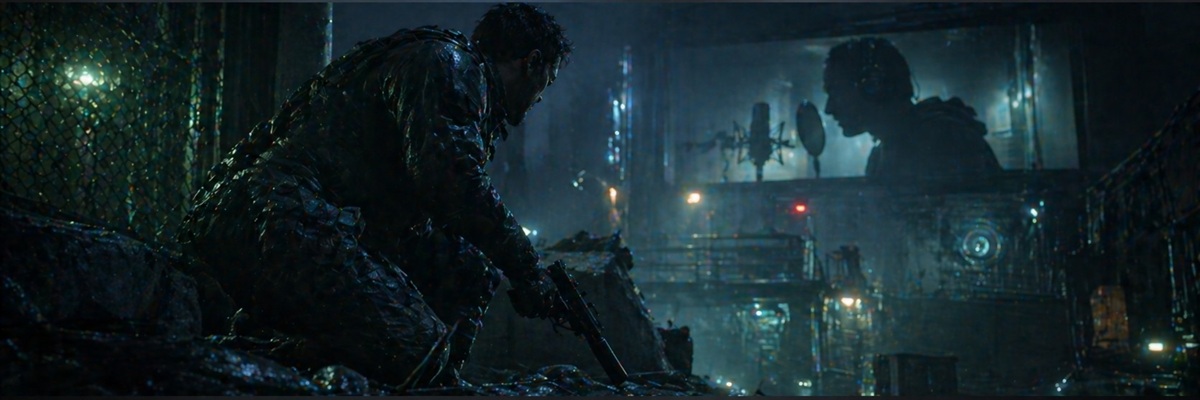
David Hayter’s voice has been synonymous with Solid Snake for decades, shaping one of gaming’s most recognizable characters. Yet even as the defining voice of the franchise, Hayter has admitted that parts of Metal Gear Solid’s story were not always clear to him during recording.
In interviews, he described moments of confusion when delivering lines from scripts filled with dense exposition and layered themes. At times, his direction was simple: deliver the line as written and trust the process. That insight offers a rare look behind the scenes of a franchise known as much for its storytelling ambition as for its complexity.
A Voice Actor Working Through an Unconventional Script
Recording dialogue for Metal Gear Solid was not a straightforward process. Hayter has spoken about encountering lines that felt difficult to interpret in isolation, particularly when scenes were disconnected from the full narrative context.
This is not uncommon in large-scale productions. Voice actors often record out of sequence, working through sections of a script without seeing how everything fits together. In a series like Metal Gear Solid, where timelines overlap and ideas build gradually, that challenge becomes more pronounced.
The writing itself adds another layer. The scripts are known for their focus on political themes, philosophical ideas, and detailed explanations of in-world systems. Delivering these lines requires precision, even when their full meaning is not immediately clear.
In those situations, performance relies on direction and instinct. Hayter has described being guided to focus on tone and delivery rather than complete understanding, trusting that the broader narrative would come together in the final product.
Metal Gear Solid and Its Approach to Storytelling
The Metal Gear Solid series, created by Hideo Kojima, has long stood apart for its cinematic approach to storytelling. From its early entries, the franchise emphasized narrative depth, blending gameplay with extended cutscenes and dialogue-heavy sequences.
Its storytelling style is defined by complexity. The games explore themes such as war, identity, surveillance, and the role of technology in society. These ideas are presented through layered narratives that often span multiple timelines and perspectives.
This structure contributes to the sense of confusion that even actors have noted. Events are interconnected, characters operate with hidden motivations, and information is revealed gradually. The result is a story that rewards attention but can be difficult to follow in individual moments.
At the same time, this approach helped set the series apart. It pushed video games toward a more narrative-driven format, influencing how stories are told within the medium.
The Legacy of the Franchise Across Generations
When Metal Gear Solid was first released in 1998, it marked a turning point for storytelling in games. Its cinematic presentation, voice acting, and narrative ambition raised expectations for what the medium could achieve.
As the series expanded, each installment added new layers to the story. Sequels introduced additional characters, timelines, and themes, building a world that became increasingly intricate. While this added depth, it also contributed to the reputation for complexity that surrounds the franchise.
In recent years, renewed interest in the series has brought its legacy back into focus. Remakes and re-releases have introduced the story to new audiences, while longtime fans continue to revisit its themes and structure.
The enduring appeal of Metal Gear Solid lies in this combination of ambition and challenge. Its narrative does not aim for simplicity, and that has become a defining part of its identity.
David Hayter’s Role in Defining Solid Snake
At the center of this complex narrative is Solid Snake, brought to life through Hayter’s performance. His voice provided a consistent anchor across a series known for shifting timelines and intricate storytelling.
Hayter’s delivery balanced intensity with restraint. Even when the dialogue was dense or technical, his tone remained grounded, helping audiences stay connected to the character. This consistency became one of the defining features of the series.
Beyond Metal Gear Solid, Hayter has built a reputation as a versatile American voice over talent whose work spans video games, screenwriting, film production, and broader entertainment media, even though his association with Snake remains central to his career. The role established a standard for video game voice acting, demonstrating how performance could support and enhance narrative.
His work also highlights the importance of voice actors in complex projects. A strong performance can bring clarity to challenging material, making it more accessible to the audience.
Balancing Performance and Narrative Complexity
The experience described by Hayter reflects a broader aspect of voice acting in narrative-heavy games. Actors are often required to deliver lines without complete context, relying on direction and performance technique to maintain coherence.
In a series like Metal Gear Solid, this balance is particularly important. The writing may be intricate, but the delivery needs to remain clear and engaging. Tone, pacing, and emphasis all contribute to how the audience understands the material.
Performance becomes a bridge between script and experience. Even when the narrative is complex, a consistent voice can guide the listener through it. This is where voice acting plays a critical role, shaping how the story is received.
Hayter’s work demonstrates how that balance can be achieved. By focusing on delivery and trusting the direction of the project, he helped create a character that remained accessible within a highly detailed narrative.
Metal Gear Solid has built its reputation on ambitious storytelling, and that ambition comes with complexity. Hayter’s reflections offer a glimpse into how that complexity is managed during production, even by those directly involved.
His performance as Solid Snake remains a defining part of the franchise, showing how voice acting can anchor a story that continues to challenge and engage audiences.
