
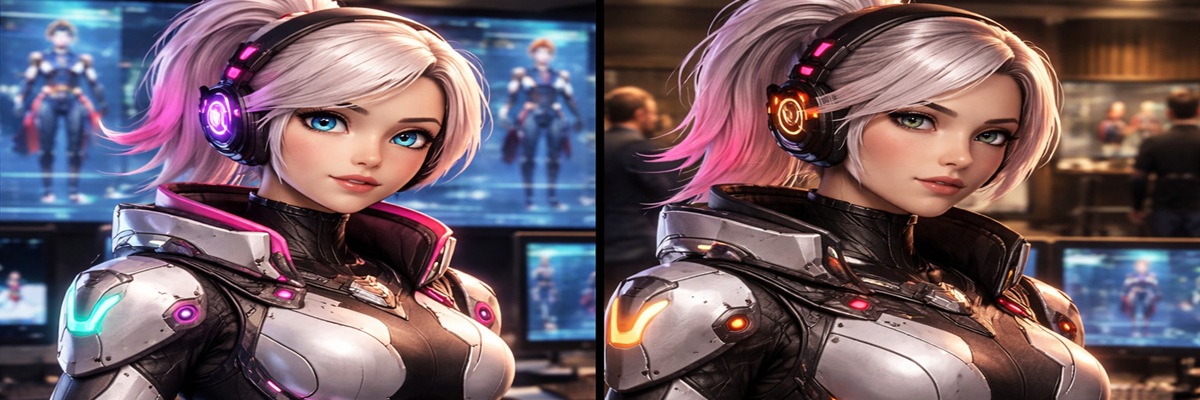
A Redesign That Started With Backlash
Blizzard’s decision to redesign Anran in Overwatch 2 did not come out of nowhere. It followed a wave of criticism from both players and within the voice acting community, turning what might have been a routine visual update into a much larger conversation.
At the center of the issue was a disconnect. Players felt the character’s original appearance did not match her tone, presence, or narrative role. At the same time, the performance behind the character suggested something more grounded and mature than what was being shown on screen.
What followed was a rare moment where fan feedback and voice actor input aligned, pushing a major studio to revisit a character’s design in a meaningful way.
Where the Original Design Fell Short
The initial version of Anran drew criticism for what many described as a “baby face” look. While stylization is nothing new in Overwatch, this particular design created a mismatch that audiences noticed immediately.
The issue was not just visual preference. It was about consistency. The character’s voice, delivery, and implied personality suggested experience and emotional depth. The face, however, communicated something younger and less defined.
This kind of mismatch can break immersion quickly. In character-driven games, players rely on visual and vocal cues to understand who a character is. When those cues do not align, the result can feel incomplete.
For many players, that is exactly what happened here.
The Voice Actor Behind Anran
An important part of this discussion comes from the voice actor behind Anran, who did not stay silent as the conversation unfolded.
Voice actors in modern games often bring more than just vocal performance. Many have extensive experience across animation, games, and commercial work, shaping how characters are perceived across different formats. In this case, the actor’s background includes roles that require emotional range, character consistency, and strong narrative delivery.
That experience informed their reaction. The concern was not about appearance alone, but about how the visual design affected the integrity of the performance.
When a voice actor builds a character, choices are made around tone, pacing, and emotional weight. If the final visual presentation suggests something entirely different, it can dilute that work.
Publicly raising that concern is still relatively uncommon in large-scale game development. That is what made this situation stand out. It showed that voice actors are becoming more willing to speak up when character alignment is at stake.
Blizzard’s Response and the Updated Look
Blizzard responded by reworking Anran’s design, making changes that aimed to better match the character’s established tone.
The updated version moved away from the softer, youthful facial structure and introduced a more defined and mature look. These adjustments were not drastic, but they were intentional. The goal was to bring the character’s appearance closer to what players were hearing in her voice.
Developers acknowledged that the earlier design direction had missed the mark. By addressing both fan concerns and internal feedback, the redesign became an example of a studio actively refining its work based on real-world response.
This kind of iteration is becoming more common, but it still carries weight when it involves a character’s core identity.
Mixed Reactions From the Community
The redesigned Anran has received a mixed response.
Some players see it as a clear improvement. The updated features feel more aligned with the character’s tone, making the performance and design work together more effectively. For these players, the change restores a sense of cohesion.
Others remain unconvinced. Some feel the redesign does not go far enough, while others question whether the original concept should have been approved in the first place.
What stands out is not just the reaction itself, but how quickly and publicly it unfolded. Feedback cycles in gaming are now immediate, and expectations for responsiveness are higher than ever.
What This Means for Voice Actors in Games
This situation highlights a shift in how voice actors fit into the development process.
Voice acting is no longer a layer added after a character is designed. It is a core part of how that character is understood. Performance influences perception, and when that perception clashes with visual design, the issue becomes visible to players.
For voice actors, this means their role carries more influence than before. It also means that alignment between departments, animation, writing, and voice, is more important than ever.
Studios that recognize this early can avoid mismatches. Those that do not may find themselves making corrections after release.
A Changing Relationship Between Studios, Talent, and Players
The Anran redesign reflects a broader shift in game development culture.
Studios are operating in an environment where feedback comes from multiple directions at once. Players share reactions instantly, and industry professionals, including voice actors, are increasingly part of that public conversation.
This creates a more dynamic development process. Changes can happen faster, but they are also more visible. Decisions are no longer contained within the studio. They are shaped, and sometimes challenged, in real time.
For developers, this means balancing creative vision with audience and talent feedback. For voice actors, it opens the door to having a more active role in how characters are ultimately presented.
When Voice and Design Need to Match
The redesign of Anran is about more than a facial update. It is about alignment.
In modern games, a character is defined by how they look, how they sound, and how players interpret both together. If one element feels out of place, the entire character can lose impact.
This situation shows that voice actors are not just delivering lines. They are helping define character identity. When that identity is not fully realized on screen, the gap becomes noticeable.
As games continue to evolve, that alignment will only become more important.
