
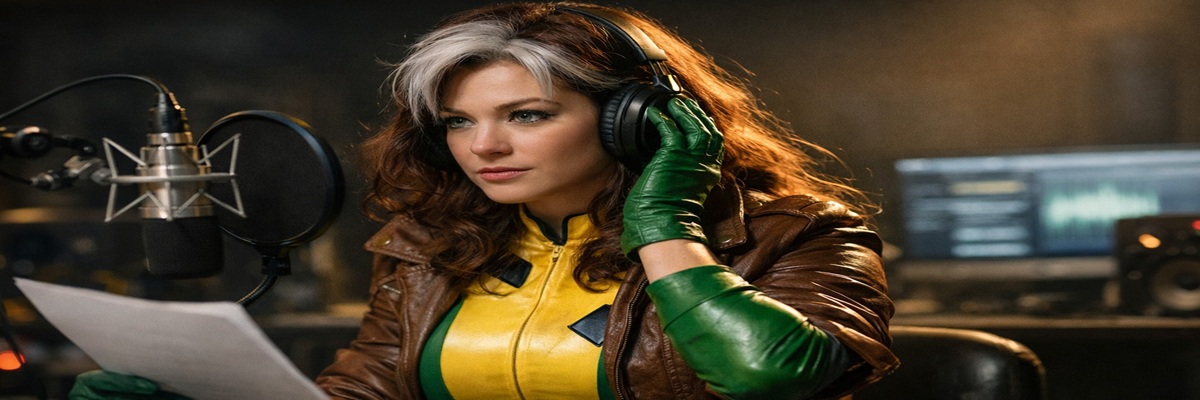
The Voice That Shaped an X-Men Icon
When X-Men: The Animated Series debuted in the 1990s, it introduced a generation of viewers to a version of Rogue that felt emotionally layered, powerful, and distinctly Southern in tone. A major part of that identity came from Lenore Zann, the Canadian voice actor whose performance helped define the character for decades.
With the revival series X-Men ’97 reigniting interest in Marvel’s animated universe, Rogue is once again at the center of fan conversations. Zann has returned to the role, and with that return has come renewed discussion about how Rogue has been portrayed across animation, live-action film, and now video games. From creative differences tied to the original X-Men movie adaptations to the character’s future in the Marvel Cinematic Universe, Rogue’s voice has become part of a much larger conversation about legacy, continuity, and authenticity.
The Animated Legacy and the Film Divide
Rogue in X-Men: The Animated Series was confident, emotionally intense, and unapologetically strong. Her Southern accent was not just a stylistic choice; it was central to her personality. The warmth in her delivery balanced the tragedy of her mutant ability, which prevents her from physically touching others without absorbing their powers and memories. Zann’s performance captured that tension beautifully, giving Rogue both steel and vulnerability.
When the live-action X-Men films arrived in 2000, Rogue was portrayed by Anna Paquin. While Paquin brought her own interpretation to the character, the cinematic version differed significantly from the animated incarnation. The film version leaned more heavily into insecurity and isolation, presenting Rogue as younger and more uncertain than the assertive hero many fans remembered from television.
Zann has openly discussed the shift, expressing that the movie portrayal did not fully reflect the confident, battle-ready Rogue she had embodied for years. For longtime viewers, the difference was noticeable. The animated Rogue was a powerhouse. The film Rogue often stood on the sidelines. That divide sparked debate among fans about adaptation choices and whether certain character traits were softened for mainstream audiences.
Now, with X-Men ’97 continuing the animated continuity, there is a renewed commitment to honoring the tone and characterization of the original series. Updates on Seasons 2 and 3 suggest that the revival will continue building on storylines established decades ago. Creative figures connected to the original show have emphasized preserving its emotional intensity and serialized storytelling. That dedication reinforces how important vocal continuity can be. When a character’s voice remains consistent, it preserves not just sound, but identity.
For many in the industry, this is a powerful reminder of how influential a professional Canadian voice actor can be in shaping globally recognized characters. Voice performances often anchor animated storytelling in ways that transcend generations.
Rogue Across Media: Games and the MCU Future
Rogue’s presence has extended well beyond television. In the competitive team-based game Marvel Rivals, the character has reentered the spotlight with updated abilities and combat mechanics designed for modern players. Once again, Lenore Zann lends her voice to Rogue, maintaining the emotional throughline established in animation.
Video games demand a different rhythm from performers. Dialogue is reactive, shorter, and often tied to gameplay mechanics. Combat barks, strategic lines, and character interactions must feel dynamic while staying true to established personality traits. Zann’s continued involvement ensures that Rogue sounds like herself, even in a fast-paced multiplayer setting. That continuity reinforces the idea that voice actors do more than perform lines; they safeguard character consistency across formats.
The conversation does not stop there. With mutants poised to enter the Marvel Cinematic Universe, speculation is mounting about who will portray Rogue in future live-action films. Zann has shared thoughtful advice for whoever steps into the role next. Her guidance centers on understanding Rogue’s emotional complexity, strength, and Southern roots. The character is not defined solely by her powers. She is defined by resilience, independence, and a guarded tenderness shaped by her inability to physically connect with others.
That perspective carries weight because it comes from someone who has inhabited the character for decades. In many ways, legacy voice performers serve as informal custodians of the roles they help create. Their insights can influence casting conversations and fan expectations alike.
For a Canadian voice actor watching this unfold, Rogue’s trajectory demonstrates how animated roles can evolve into multi-platform franchises. It also highlights how a professional Canadian voice actor can build a performance that becomes inseparable from a character’s public identity. The influence of voice work does not fade when a property transitions to live action. Instead, it shapes how audiences measure new portrayals.
As Marvel continues expanding its cinematic universe, the question is not simply who will play Rogue next. It is how closely that performance will connect to the emotional blueprint established in animation.
A Character That Endures
Rogue remains one of the most emotionally complex members of the X-Men roster. From her early animated appearances to her revival in X-Men ’97 and her reintroduction in modern gaming, the character has maintained a strong cultural presence.
Lenore Zann’s portrayal stands at the center of that longevity. Her work helped solidify Rogue as fierce yet compassionate, powerful yet deeply human. As Marvel charts the character’s future on film, the animated legacy continues to inform expectations.
In an industry where characters are frequently reimagined, Rogue’s voice serves as a reminder that performance history matters. The next actor to take on the role will bring something new, but the foundation has already been set by a Canadian voice actor whose interpretation shaped generations of fans.
