
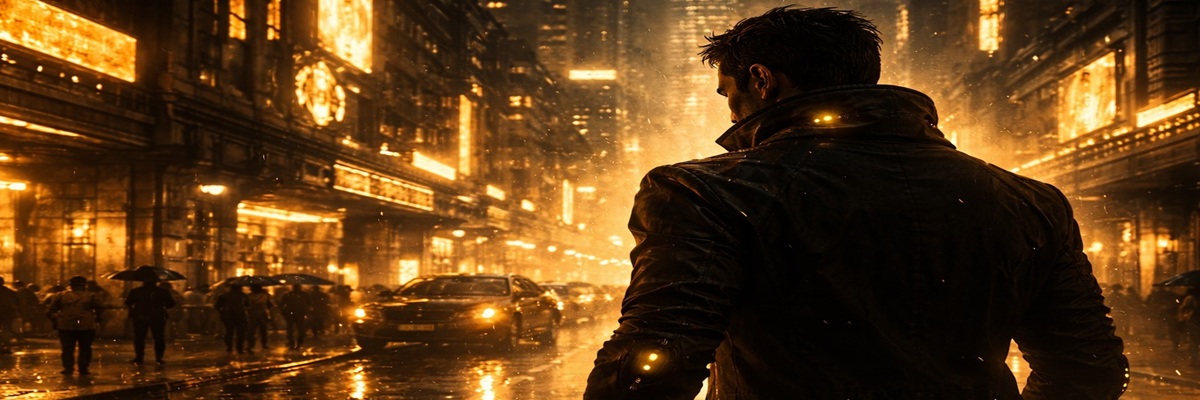
The Deus Ex series has long held a distinctive place in video game history. Known for its blend of cyberpunk aesthetics, political themes, and player choice, the franchise has maintained a devoted following even as new entries have failed to materialize. That absence has returned to the spotlight after recent comments from the voice actor behind Adam Jensen, the central character of the modern Deus Ex titles.
The remarks reignited discussion around why the series has remained inactive and what that silence says about the current state of large-scale game ownership. For many fans, the frustration echoes a familiar question: how can a franchise with lasting recognition remain untouched for so long?
Adam Jensen’s voice actor spoke openly about his disappointment with the lack of progress on a new game, making it clear that he does not expect a new Deus Ex title to arrive in 2026 or in the near future. His comments pointed squarely at the owners of the intellectual property, criticizing corporate decision-making rather than creative limitations. While the language used drew headlines, the underlying message reflected a broader tension between creative legacy and corporate control.
The comments did not come with insider confirmation of a cancellation, but they did align with the broader reality surrounding the franchise. Deus Ex has changed hands through acquisitions, eventually becoming part of Embracer Group’s extensive portfolio. In recent years, Embracer has undergone significant restructuring, shelving projects and closing studios as it reevaluates spending and long-term strategy. In that environment, even recognizable franchises can be left idle.
From a business perspective, dormant intellectual property is often treated as a long-term asset rather than an active creative obligation. Companies may hold onto recognizable names without immediate plans to develop them, waiting for favorable market conditions or internal alignment. For fans and creatives, that waiting period can feel endless, particularly when demand remains visible.
For voice actors closely tied to iconic roles, the situation can be uniquely frustrating. Performers like the actor behind Adam Jensen are often asked about the future of their characters despite having no control over development decisions. Over time, they become unofficial spokespeople for franchises that are no longer in motion. When updates fail to appear, that visibility can turn into pressure, even though the decisions lie elsewhere.
The Deus Ex situation also reflects a wider pattern in the industry. Large publishers now manage vast libraries of intellectual property, far more than they can actively develop at once. As a result, some series become paused indefinitely, neither officially ended nor actively supported. This limbo can be difficult for audiences to accept, especially when a franchise’s themes feel increasingly relevant to modern conversations around technology and power.
Despite the frustration, there has been no formal announcement that Deus Ex is permanently over. The absence of a public roadmap leaves the door open, even if only slightly. For now, the franchise remains on hold, shaped more by ownership strategy than creative ambition.
The voice actor’s comments struck a nerve not because they revealed new information, but because they voiced what many fans have felt for years. Deus Ex continues to exist as an idea, a legacy, and a point of reference, even as its future remains uncertain. Whether that legacy will be revisited depends less on creative readiness and more on corporate willingness to act.
