
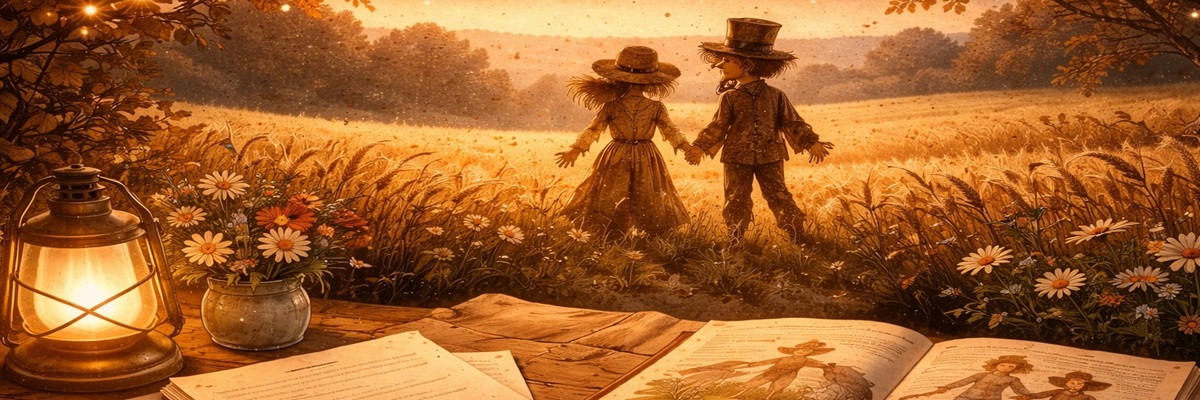
The Scarecrows’ Wedding arrives on television as a familiar story brought to life in a new way. Based on the popular children’s book by Julia Donaldson and Axel Scheffler, the animated adaptation relies heavily on voice performance to translate the warmth and humor of the original illustrations to the screen. With simple visuals and a gentle pace, the voices become the primary way young viewers connect with the characters.
For family audiences, this type of storytelling places unusual importance on vocal tone and clarity. The adaptation leans into that strength, using experienced performers to guide the story rather than overwhelm it.
A Familiar Story Told Through Voice
The story follows two devoted scarecrows whose quiet life is disrupted when one is taken away, setting the stage for a heartfelt journey shaped by loyalty and determination. In adapting the book for television, the production stays close to its source, allowing narration and dialogue to do most of the emotional work.
Unlike fast-moving animated series, The Scarecrows’ Wedding gives its performers room to breathe. Lines are delivered with patience, allowing younger viewers time to absorb both meaning and mood. This approach reflects a long tradition of British children’s television that values storytelling rhythm as much as visual design.
The Voice Cast Behind the Characters
The adaptation features a small but well-chosen voice cast, including experienced female voice actor Jodie Whittaker, whose warmth and conversational delivery style fit naturally within family-oriented animation and children’s storytelling. Their performances are deliberately restrained, avoiding exaggerated delivery in favor of warmth and sincerity.
Each character is defined through subtle vocal choices rather than dramatic shifts in pitch or volume. The scarecrows themselves feel gentle and earnest, while supporting roles provide contrast without disrupting the story’s calm tone. This balance helps the production remain accessible to very young viewers while still holding the attention of adults watching alongside them.
Because the animation style is intentionally simple, the voices carry responsibility for establishing personality and emotion. The cast succeeds by focusing on clarity and emotional consistency, allowing the story’s themes to come through naturally.
Storytelling Carried by Sound Rather Than Spectacle
The Scarecrows’ Wedding demonstrates how effective voice acting can shape an adaptation without relying on visual complexity. The performances create a sense of continuity between the book and its televised form, preserving the gentle charm that made the story popular in the first place.
For viewers, especially children encountering the story for the first time, the voices become the guiding presence. They shape how the characters are understood and remembered long after the screen fades to black. In that way, the adaptation stands as a reminder that strong voice work remains central to family storytelling, even in an era filled with increasingly elaborate animation.
