
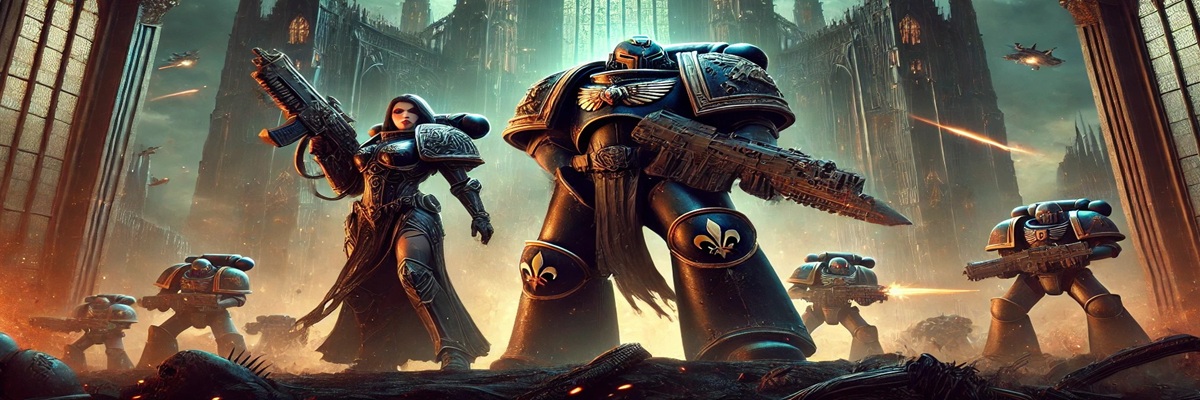
The Warhammer 40,000 universe continues to grow, and the announcement of Boltgun II has arrived at a moment when the franchise is experiencing renewed attention across games, animation, and community-driven projects. The first Boltgun revived a classic shooter style with modern polish, offering fast action and a tone that fit the grim Warhammer setting. The sequel expands that foundation with a larger scale, a deeper story, and new characters who play key roles in bringing the world to life.
The reveal came alongside other Warhammer announcements. These include a tactical RPG titled Dark Heresy and a free typing game. Together, they show that Games Workshop and its partners are investing in a wider slate of projects that appeal to different types of players. Boltgun II is positioned as the headline title for fans of action games who want something faithful to the setting while still being accessible.
The sequel introduces fresh environments along with new threats, and early footage highlights more complex level design and a greater focus on personality within the campaign. These elements require strong performances from the cast because the Warhammer universe is built on tone, attitude, and the emotional weight of its characters. Even within a rapid-fire shooter, the right delivery can elevate key moments.
Players already familiar with the first game are watching closely to see how the sequel balances familiar mechanics with innovations. Based on the trailer and initial comments from the development team, this installment aims to deliver something with more narrative drive. Voice actors will be central to that effort because their work helps define how players experience both the action and the lore that surrounds it.
Expanding the World Through Voice Talent
One of the most talked-about aspects of Boltgun II is its cast. The Warhammer community is known for its enthusiasm, and having performers who appreciate the universe makes a noticeable difference. The confirmed lineup brings together actors who understand how to carry the weight of the setting.
Rahul Kohli returns to voice the lead Space Marine. He shared insights on his approach in a Warhammer Community feature, explaining how he shaped a performance that feels grounded within the lore. Capturing the heavy, deliberate nature of a Space Marine is not simple because it requires a balance between restraint and force. Kohli discussed how he prepared by adjusting his breathing, pacing, and vocal pressure to reflect the physical presence of the character. He described the work as demanding but rewarding, and players praised his performance in the first game for being commanding without sounding exaggerated.
Another major highlight is the casting of Alanah Pearce as Nyra Veyrath. Pearce has a strong connection to the gaming world, and her experience as a writer, presenter, and creative commentator gives her a unique perspective in the booth. Her decision to join the project drew widespread attention, especially after she appeared in a feature discussing her role as a Battle Sister. She approaches her characters with a deep respect for the tone and expectations of the audience, which fits the Warhammer environment perfectly.
The cast also includes returning performers from earlier Warhammer games, along with new voices who add stylistic variety. This mix helps the game maintain the personality of the first installment while introducing new dynamics. As Warhammer titles become more cinematic, the voice actors play an essential part in delivering moments that stand out. The combination of veteran performers and creative newcomers reflects the direction of modern game development, where casting is about finding voices that reinforce the world’s identity.
Inside the Booth With Alanah Pearce
Alanah Pearce’s involvement generated significant interest because she offered detailed insight into her process. She explained how she approached the role of Nyra Veyrath, a Battle Sister who embodies discipline and conviction. Instead of treating it as a standard action role, she studied how characters within this faction carry themselves, how they speak, and what drives them.
Pearce noted that recording for a Warhammer project comes with expectations from a long-standing community. She prepared by rewatching cinematics, reading updated lore summaries, and observing how different groups within the Imperium express their motivations. This helped her find a balance between intensity and control, which allowed her performance to feel natural rather than forced.
Another point she discussed was the physical aspect of recording. Battle Sisters often speak with decisive energy, and Pearce mentioned that she had to pace her sessions to avoid vocal strain. She described how she rehearsed her lines in stages, focusing on tone first and volume later. This helped her maintain consistency across sessions while protecting her voice.
Her interview also highlighted the collaborative environment of the studio. The voice direction team encouraged her to experiment with smaller emotional cues that might not be obvious in a fast-paced shooter. Small changes in pitch, pauses, or sharpness helped shape Nyra’s personality so she did not sound like a generic warrior. Pearce appreciated that level of care because it allowed her to build a character with depth even during brief lines.
Pearce also discussed her personal connection to the franchise. She has followed Warhammer content for years, and her familiarity with its themes influenced how she understood the seriousness of her character’s role. This familiarity was not treated as an advantage over other actors but as an added layer that helped her capture certain details more intuitively.
Rahul Kohli and the Art of Becoming a Space Marine
Rahul Kohli has become a recognizable presence in game voice acting largely because he commits fully to the worlds he works in. For Boltgun II, he explained that portraying a Space Marine requires a specific mindset. He studied how these characters speak, move, and react within the immense lore of Warhammer. His goal was to deliver a performance that felt heavy, deliberate, and unwavering.
Kohli shared that he adjusted his breathing patterns before recording lines to reflect the physical nature of the character. Space Marines do not speak quickly or with light emotion. Instead, their words carry intention. This meant he sometimes had to slow his natural speech rhythm or use shorter bursts of breath to achieve a sense of depth and power.
He also described the challenge of mixing subtle emotional cues into a character who is trained for battle above all else. Space Marines rarely express fear or doubt, yet they still have individual motivations. Kohli found ways to shape slight variations in tone to show determination or focus during key moments. He viewed this as a chance to contribute something meaningful to a universe he admires.
His growing connection to the Warhammer community has been noted by fans. Many appreciate that he approaches the role with genuine enthusiasm rather than treating it as a one-off performance. This connection adds authenticity to his work, which helps ground the character amid the intense action of the game.
From Fandom to Performance in Warhammer Voice Work
One of the most interesting trends surrounding Boltgun II is the casting of performers who already have a personal link to the franchise. Both Alanah Pearce and Rahul Kohli have spoken openly about their long-standing appreciation for Warhammer. This creates a unique dynamic where the performers approach the material with both professional focus and genuine excitement.
Casting fans of the universe can be a significant advantage. These performers understand the tone and stakes of the setting before stepping into the booth, which reduces the time needed to adjust to the style of the script. They also grasp the community’s expectations, so they approach the lines with care and accuracy.
However, this approach goes beyond convenience. When performers care deeply about the source material, their delivery often reflects that connection. Pearce and Kohli both highlighted how their familiarity helped them make choices that align with the identity of the factions they portray. This type of casting shows how modern game development benefits from a pool of performers who grew up with these worlds.
The Warhammer community also responds strongly to casting choices that feel authentic. When players learn that the actors are fans themselves, it adds a level of trust to the performance. This creates a positive cycle. The audience is more receptive, the performers feel more connected, and the final product becomes richer because the delivery carries more intention.
As Warhammer continues to grow across genres and platforms, this trend may shape future casting decisions. The franchise has a vast universe, and many creators across film, games, and online media have been fans for years. Involving them in new projects expands the franchise’s reach and reinforces its identity through voices that understand its tone instinctively.
What Boltgun II Means for the Future of Warhammer Games
Boltgun II signals a period of growth for the Warhammer gaming landscape. The combination of classic shooter mechanics, polished visuals, and a strong cast provides a foundation for a sequel that could reach beyond existing fans. Its announcement came at a time when Warhammer projects are expanding across multiple genres, which suggests a strategy focused on variety and long-term engagement.
The involvement of talent like Rahul Kohli and Alanah Pearce reflects a shift toward character-driven presentation even in fast-paced action games. As performance quality becomes a priority, voice actors play a greater role in shaping the experience. Their work gives personality to the battles, structure to the narrative, and emotional weight to the world.
For players, this means that Warhammer games are developing a stronger identity that blends deep lore with accessible storytelling. For the voiceover community, it means that projects tied to major franchises continue to offer roles that require skill, commitment, and understanding of the material.
Boltgun II stands at the center of that movement and offers a look at how Warhammer’s future may unfold through sound, performance, and character-driven design.
