
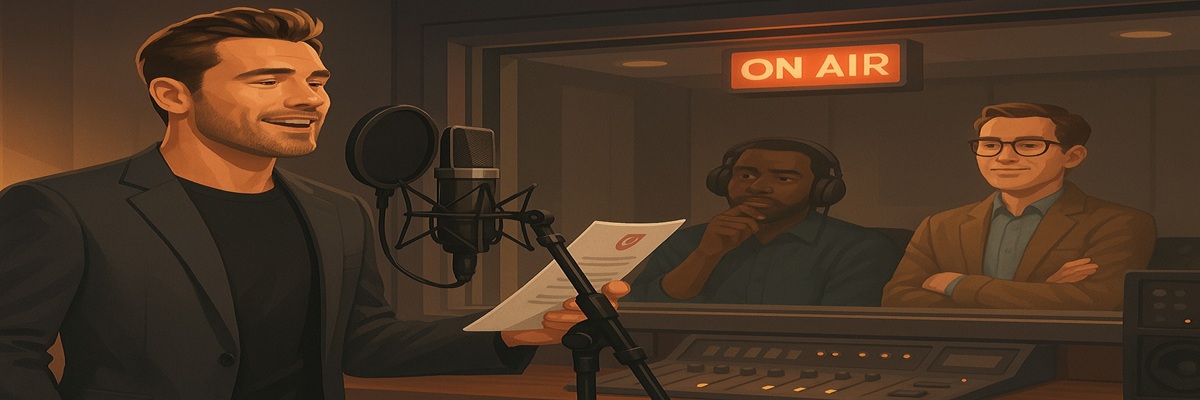
The Temptation of a Famous Voice
When a brand looks to make a statement, few temptations are as strong as hiring a celebrity to be its voice. The reasoning seems straightforward: fame equals recognition, and recognition implies trust. For decades, advertisers have followed this logic, hoping that a well-known voice will lend instant credibility or charm to their campaigns. But that assumption can easily backfire.
A famous voice may bring attention, but it also brings baggage, personal associations, public perception, and the risk of overshadowing the product itself. The focus shifts from what’s being sold to who’s speaking. A commercial that should connect with a viewer on an emotional level instead becomes a showcase of celebrity identity.
As the late British voice artist Ray Brooks once represented, a truly effective commercial voice doesn’t need to be famous. It needs to be believable. And in the hands of skilled voice actors who understand how to translate tone, rhythm, and emotion through sound alone, believability is exactly what audiences respond to.
When the Voice Overshadows the Message
The idea that a celebrity voice guarantees success is more myth than marketing truth. When the voice is too familiar, it can become a distraction. A well-known example from animation history illustrates this perfectly. When DreamWorks announced that Eddie Murphy would voice Donkey in Shrek, the movie generated excitement but also changed the audience’s experience. Once you knew it was Murphy, you couldn’t help but see him rather than the character. The illusion of the world vanished under the weight of recognition.
That same effect has played out repeatedly in advertising. When a campaign leans on celebrity power, the brand often disappears behind the star. Consider Pepsi’s infamous 2017 commercial featuring Kendall Jenner. Though visually striking, the message meant to symbolize unity was lost amid criticism of tone-deaf imagery. The celebrity presence amplified the backlash rather than the intended message.
Another example came from Peloton in 2021, when actor Chris Noth’s post-Sex and the City cameo, initially meant to be a playful reference, turned sour following off-screen controversies. The brand’s name trended for the wrong reasons, demonstrating how quickly a celebrity endorsement can turn into a reputational risk.
Even less dramatic cases reveal the same flaw: when a celebrity’s image is stronger than the message, audiences focus on them. The product fades into the background. In voiceover terms, the commercial’s most powerful tool, the narrative voice, becomes an obstacle rather than an asset.
Why Professional Voice Actors Excel Where Celebrities Struggle
Voice acting is an art that thrives on precision, not popularity. Ray Brooks, whose familiar tones once filled countless British radio and TV ads, exemplified this. His name wasn’t instantly recognizable, but his voice was. That’s the power of professional voice talent; it blends invisibility with influence.
A trained voice actor brings skills that go far beyond reading lines. They understand pacing, tone, and emotional timing, how to stretch a syllable for emphasis or pause for impact. They can shift seamlessly between sincerity and energy, keeping the audience engaged without ever pulling focus away from the product.
Celebrities, by contrast, often depend on visual performance expressions, gestures, and presence. When those are stripped away, what remains must carry all the weight through sound alone. Many discover that their voice alone doesn’t communicate the same magnetism. Even comedians, masters of timing, can struggle to adapt. Their delivery is crafted for laughter in front of an audience, not for clarity in a 30-second script that needs to inform, persuade, and entertain all at once.
The craft of voiceover lies in restraint and control qualities, easy to underestimate and hard to fake. And yet, in the race for star power, advertisers often overlook that subtlety.
During the pandemic, this skill gap became even more visible. With professional studios closed, many commercials were recorded remotely. Suddenly, anyone with a microphone and a blanket for soundproofing claimed to be a voice artist. Quality plummeted, and with it, listener engagement. It served as a reminder that what sounds “easy” speaking into a mic is anything but.
When Celebrities Do Get It Right
To be fair, not all celebrity voiceovers fail. When the alignment between voice and brand is authentic, the results can be exceptional. Some of the most memorable campaigns in modern advertising owe their success to carefully chosen celebrity voices who understood the medium.
Morgan Freeman remains one of the most cited examples. His voice carries warmth, authority, and familiarity, yet never feels intrusive. Whether narrating for a bank, a documentary, or a tech company, his delivery communicates trust without overshadowing the message. The brand benefits from his tone, not his fame.
George Clooney’s long-running association with Nespresso is another success story. His effortlessly sophisticated delivery mirrors the brand’s premium identity, reinforcing the product’s narrative without straying into self-promotion, a balance often seen in high-performing food & beverage commercials. Similarly, Emma Thompson’s gentle yet assured narration for British Airways embodies professionalism and comfort, enhancing the brand’s tone rather than diluting it.
Even Matthew McConaughey’s work with Lincoln, though divisive, demonstrated how a recognizable voice can give a brand a distinctive, memorable sound. The key difference in these cases lies in compatibility. The celebrity’s persona supports the message rather than competes with it.
So while fame alone doesn’t guarantee connection, the right match between voice and message can amplify storytelling in ways that benefit both.
The Celebrity Paradox: Visibility vs. Authenticity
The pursuit of celebrity voices often comes down to visibility. Advertisers assume that if a familiar voice is heard, recognition will follow, and with recognition comes trust. But this logic misunderstands how trust is built. Audiences don’t trust because they recognize a voice they trust. After all, the voice fits the message being told.
When a celebrity is brought in primarily for marketing bragging rights, the purpose of the ad is lost. Many agencies even publicize celebrity casting before a campaign launches, turning the process into a press event. But as one industry insider noted, “If you have to tell people it’s a celebrity, you’ve already missed the point.”
There’s also a financial paradox. Once a celebrity’s face becomes tied to their voice, the campaign crosses into “personal endorsement” territory, dramatically increasing costs. What started as an attempt to sound relatable can quickly become a legal and financial headache.
Meanwhile, lesser-known voice actors continue to deliver authentic, effective performances that resonate with audiences precisely because their voices are not associated with any one person. Take Simon Greenall’s portrayal of Aleksandr the Meerkat from the comparethemarket campaign, one of the UK’s most successful long-running ad characters. Viewers see Aleksandr, not the actor behind him. That’s the power of anonymity in voiceover: it keeps the story pure.
The same could be said for Rob Brydon’s early radio work, long before he became a household name. His ability to play multiple characters with distinct personalities made him invaluable to producers. Similarly, Hugh Dennis and Miriam Margolyes began their careers as versatile voice artists before fame found them, and long before fame became a casting requirement.
These examples remind us that the most effective commercial voices aren’t famous because they were chosen; they became recognizable because they were right for the message.
Rethinking Commercial Casting: Where the Industry Is Headed
Advertising has always reflected the times, and right now, the industry is at a crossroads. Between the growing presence of synthetic voices and the overuse of celebrity narration, many campaigns sound either artificial or self-conscious. Yet, amid this noise, a quiet return to craftsmanship is happening.
Brands are beginning to rediscover the value of authentic sound voices that feel grounded, human, and trustworthy. In a world of algorithmic sameness, emotional texture has become the new currency. A professional voice actor brings exactly that: a performance built on empathy, rhythm, and sincerity.
The renewed appreciation for skilled voice artists is visible across sectors, from financial institutions seeking credibility to healthcare brands needing calm authority. Their impact comes not from who they are, but from what they can make you feel in under thirty seconds.
Meanwhile, the fascination with celebrity continues, but it’s slowly evolving. Instead of choosing a voice for fame, some brands are opting for subtle recognition, well-known but not overpowering voices, where the performance supports the product rather than eclipses it.
The lesson for advertisers is clear: recognition fades, authenticity lasts. A famous voice might draw ears, but a skilled voice keeps attention.
As technology changes and trends shift, one truth remains constant: the voice is the heart of a commercial. When chosen wisely, it doesn’t just sell a product; it builds connection, trust, and identity. The next time a brand reaches for a famous name, it might do well to ask a simpler question first: Does this voice serve the story, or steal it?
