
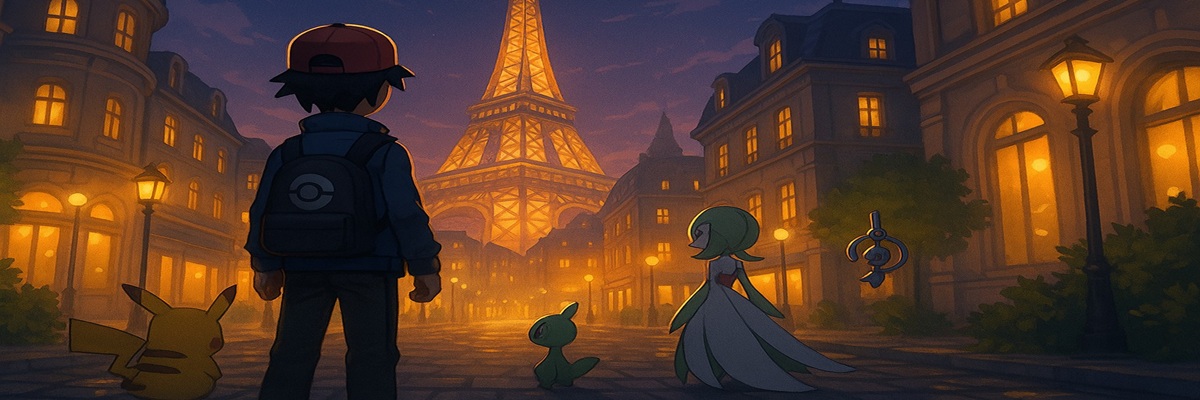
Pokémon Legends: Z-A has quickly captured the attention of players around the world since its debut, praised for its open-world design, improved visuals, and ambitious storytelling. But amid the excitement, a familiar debate has resurfaced about the absence of voice acting. For many fans, this latest entry from Game Freak feels like another missed opportunity to bring the Pokémon world fully to life.
The Legends subseries began with Pokémon Legends: Arceus in 2022, a game that marked a major shift in the franchise’s approach to exploration and narrative. Z-A continues that evolution, offering a reimagined Kalos region, new mechanics, and deeper emotional beats. Yet despite the series’ growing cinematic presentation, all characters remain silent, their dialogue still delivered through text boxes.
As highlighted in reports from Polygon, Inverse, and My Nintendo News, this silence has become increasingly noticeable as other major Nintendo titles, such as The Legend of Zelda: Tears of the Kingdom, embrace fully voiced performances. While Pokémon has made subtle moves toward more expressive storytelling, the lack of spoken dialogue continues to divide fans.
A Strong Start with Familiar Shortcomings
Early reactions to Pokémon Legends: Z-A have been largely positive. Players have praised the game’s expansive environments, refined catching mechanics, and dynamic weather systems. Many feel that Game Freak has finally balanced exploration and strategy in a way that reflects the spirit of adventure the franchise has always promised. However, alongside the praise, social media and gaming forums have been filled with posts expressing frustration that the series, one of the most profitable in the world, still refuses to incorporate voice acting.
For longtime fans, the absence feels out of step with the rest of modern gaming. Characters like Professor Sycamore, the protagonist’s allies, and new key figures in the story have cinematic camera angles and emotional animation sequences that seem designed for spoken dialogue. Instead, they speak only through text, leaving players to imagine their tone and delivery.
One popular thread on Reddit described the experience as “watching a movie with the sound off,” while others argued that voice acting could elevate the storytelling without disrupting the charm of the series. Some players even created fan-made dubs of early Z-A cutscenes, showing how easily performances could enhance emotional moments.
Game Freak’s Ongoing Silence on the Matter
Game Freak has yet to officially comment on whether the decision to exclude voice acting was creative or technical. Industry speculation suggests that localization complexity and Nintendo’s long-standing tradition of keeping Pokémon games accessible across global markets may be contributing factors. Still, many fans argue that the franchise’s scale and resources make these concerns outdated.
The Evolving Expectations of Modern Players
As video games continue to advance in storytelling and presentation, expectations for immersive experiences have naturally grown. Titles released on the Nintendo Switch in recent years, such as Fire Emblem: Three Houses, Metroid Dread, and Xenoblade Chronicles 3, have shown that strong voice performances can deepen emotional connection without sacrificing gameplay focus.
For Pokémon Legends: Z-A, which features a more cinematic structure and narrative-driven cutscenes than its predecessors, the lack of voice acting feels increasingly conspicuous. Reviewers from Polygon and Inverse note that while the visuals and animations have taken a significant step forward, moments that should feel impactful sometimes fall flat because of the silence. The game’s pacing and atmosphere create a sense of wonder, but dialogue sequences lose energy when the characters’ emotions are left entirely to text.
Voice acting, many fans argue, would not only enhance immersion but also help establish distinct personalities for recurring characters. It could allow trainers, rivals, and supporting cast members to stand out more vividly, much like how Persona or Final Fantasy titles use performance to give life to their ensembles. For a world as emotionally rich as Pokémon, players believe that hearing voices could help them form deeper bonds with both humans and Pokémon alike.
Cultural Impact and Missed Opportunities
The Pokémon brand has long been a global cultural force, and that reach is part of why the absence of voice acting draws such attention. While the animated series and films have built a legacy of memorable vocal performances from Ash Ketchum’s determination to Team Rocket’s comic flair, the main games remain silent. This disconnect has puzzled fans for years, especially when spin-offs like Detective Pikachu have demonstrated how effective voice acting can be in the franchise.
Critics suggest that Pokémon Legends: Z-A could have been the ideal turning point. Its storyline, centered around exploring a transforming Kalos region and uncovering the mysteries of Lumiose City’s reconstruction, is more ambitious than typical mainline entries. Emotional cutscenes, detailed expressions, and sweeping camera movements signal that the developers are reaching for a cinematic feel, but without performances to match, the experience can feel incomplete.
The Community’s Creative Response
Despite the ongoing debate, fans have responded with creativity. Online projects are already circulating that add unofficial voice work to cutscenes, showcasing the community’s enthusiasm for what could be possible. Streamers and content creators have even begun recording their own dubbed playthroughs, voicing major characters and Pokémon cries to simulate what a fully voiced version might sound like.
This collective effort highlights how invested the fanbase remains. Rather than being divided, many discussions show an eagerness to see the franchise evolve. Players don’t necessarily want cinematic realism; they just want emotional resonance to match the quality of the stories Game Freak is beginning to tell.
A Debate That Extends Beyond Kalos
The discussion around voice acting in Pokémon Legends: Z-A isn’t just about one title; it reflects a broader shift in how fans view storytelling in games. For decades, Pokémon has thrived on accessibility, charm, and imagination, letting players project their own interpretations onto silent characters. But as the franchise continues to evolve into more cinematic experiences, many believe it’s time to let those characters truly speak.
Developers at Game Freak have always balanced tradition with innovation, carefully adjusting what defines a Pokémon adventure. When Pokémon Legends: Arceus launched, it broke new ground in world design and gameplay structure, proving that change could work within the brand. Z-A builds on that foundation by refining visuals, expanding exploration, and weaving in deeper narrative themes, yet one key element remains untouched.
Voice acting could be the next step in that evolution, one that helps bridge the gap between the franchise’s nostalgic roots and its growing cinematic ambitions. It wouldn’t need to replace the series’ classic tone or humor; rather, it could enhance it, adding new layers to emotional moments that already resonate through animation and music.
What the Future Might Hold
Whether Game Freak will eventually introduce full or partial voice acting remains uncertain. Industry analysts suggest that the developer’s next project after Z-A could be pivotal in determining that direction. With the Nintendo Switch nearing the end of its life cycle and a next-generation console rumored to be on the horizon, the transition period offers a natural opportunity to reexamine the series’s approach to storytelling.
Some fans believe that a hybrid model, limited voice lines in key story scenes while maintaining text for casual dialogue, could strike the right balance. This approach would preserve accessibility across multiple regions and languages while still giving major moments the performance weight they deserve.
Others argue that keeping the characters silent has become a part of Pokémon’s identity, allowing universal interpretation. Yet even among that group, there’s recognition that the franchise’s storytelling ambitions are growing faster than its presentation style.
A Silent Frontier Waiting to Be Heard
At its core, Pokémon Legends: Z-A remains a success, a bold and inventive step forward that showcases Game Freak’s willingness to evolve the formula. The game’s world-building, emotional tone, and intricate detail prove that the studio is still capable of surprising players after nearly three decades. But its silence serves as a reminder of an unspoken limitation: the gap between the depth of its world and the voices that could inhabit it.
As players continue to share their experiences, one thing is clear: the demand for voice acting isn’t about changing what Pokémon is, but about realizing its full potential. With Z-A proving how far the series can go in storytelling, perhaps the next leap forward will finally let the people of its world and the fans who have followed them for generations hear those stories out loud.
