
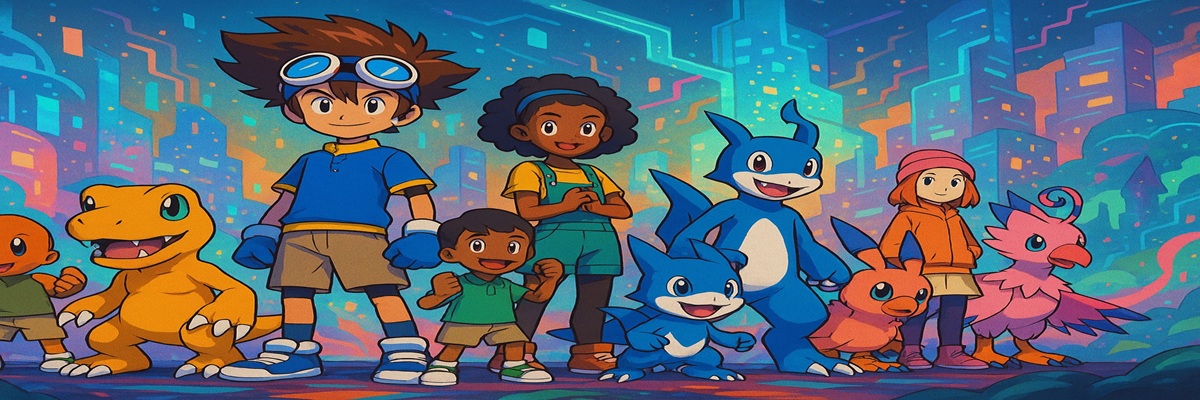
Digimon Story: Time Stranger brings the Digital World vividly to life thanks in large part to its talented voice cast. The game features voice actors with impressive resumes in both anime and video games, ensuring that every character resonates well with players.
Leading the cast is Griffin Burns, who voices Dan Yuki, the male protagonist. Known for his role as Muichiro Tokito in the widely acclaimed Demon Slayer -Kimetsu no Yaiba, Burns lends his dynamic and engaging presence to Dan, bringing energy and determination to the young secret agent character. Amber Lee Connors voices Kanan Yuki, the female protagonist. Connors is well recognized for characters like Furina in Genshin Impact and I-No in Guilty Gear Strive, which speaks to her versatility and strong performance skills.
Allegra Clark voices Inori Misono, delivering a role full of emotional depth. Clark’s credits include popular anime such as Jujutsu Kaisen and Blue Exorcist and notable video game roles like Mitsuru Kirijo in Persona 3 Reload. Alexis Tipton performs as Mirei Mikagura and is renowned for characters like Trunks in Dragon Ball Z games and Lucina in the Fire Emblem series.
Veteran voice actress Tara Jayne Sands lends her voice to Hiroko Sagisaka, having also contributed extensively to Pokemon and Yu-Gi-Oh! franchises. Joe Zieja voices Kosuke Misono and is best known for Claude von Riegan in Fire Emblem Three Houses. Cristina Valenzuela (Aegiomon), Katiana Sarkissian (Asuna Shiroki), Brad Davidorf (Kodai Kuremi), and Gavin Hammon (Shota Kuroi) round out the main English voice cast with strong performances across the board.
The game boasts an extensive cast with Japanese voice actors too, such as Hiro Shimono, Marina Inoue, Kana Ichinose, and Miyuki Sawashiro, providing fans with authentic performances in both languages.
Exploring Gameplay Mechanics in Digimon Story: Time Stranger
Digimon Story: Time Stranger refreshes the monster-taming RPG genre with classic yet modernized gameplay. Players strategically command a team of up to three Digimon during turn-based battles, exploiting a complex system of attributes—Data, Virus, and Vaccine—and elemental affinities such as Fire, Earth, and Light. This layered weakness and resistance mechanic demands thoughtful team composition and tactical combat decisions.
The Digivolution system stands out as a deeply customizable feature. Players can evolve their Digimon through multiple branching paths based on stat thresholds and player choices, encouraging experimentation with evolving, devolving, and re-evolving to create unique builds. Recruitment hinges on a scan percentage mechanic, where defeating Digimon in battle gradually increases the chance to add them to your roster.
The game world offers diverse, vibrant environments perfect for exploration, such as serene beaches and mysterious digital realms. Side quests and missions add charm despite their simplicity, often rewarding players with materials that boost abilities and character growth. Quality-of-life improvements like faster combat and auto-battle options are a hit, making the experience accessible without sacrificing strategic depth.
Overall, public and critical reception applauds Time Stranger for balancing nostalgia with innovation, creating a fresh yet faithful evolution of the Digimon RPG experience.
Voice Acting Elevates the Story and Characters
One of the defining strengths of Digimon Story: Time Stranger is its outstanding voice acting, which breathes life into the story and its characters. While the main protagonist remains silent to allow player immersion, the richly voiced supporting cast adds emotional resonance to the time-travel narrative and evolving character relationships.
The lead voice actors impress with performances that range from upbeat and humorous moments to dramatic and heartfelt scenes, showcasing the range and impact of video game character voices. Griffin Burns’ portrayal of Dan Yuki encapsulates youthful determination, Amber Lee Connors provides vitality to Kanan Yuki, and Allegra Clark brings emotional complexity to Inori Misono. The supporting cast’s performances maintain a high standard, ensuring every character arc feels authentic.
Voice acting is also woven thoughtfully into battles, with voiced attacks and reactions intensifying immersion across both English and Japanese versions. These vocal flourishes underscore character personalities and enhance the gameplay experience. Critics have noted that the voice work notably strengthens scenes that might otherwise lag due to pacing, making narrative moments more compelling.
Combined with polished cinematic sequences, the voice acting integrates seamlessly with the game’s visuals and story, making Time Stranger a standout title that sets a high bar for future voice acting quality in monster-taming RPGs.
