
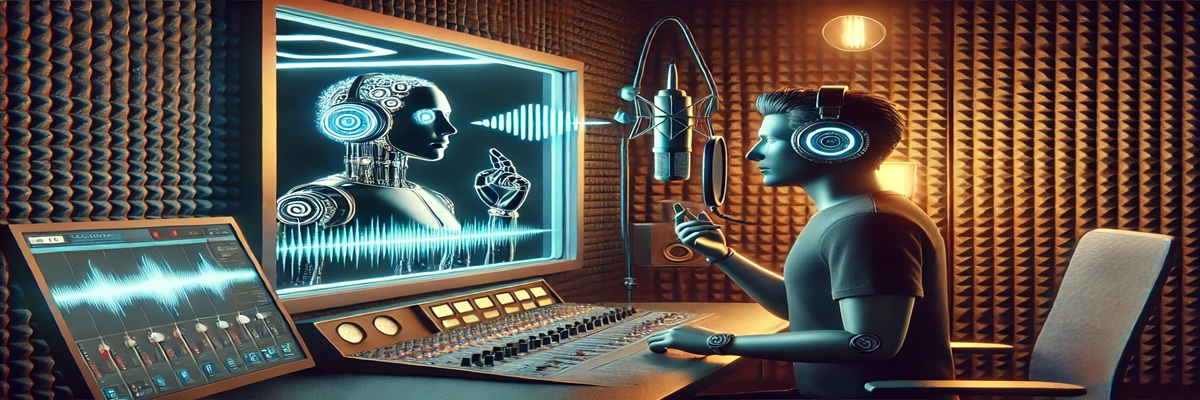
A Tipping Point for the Dubbing Industry
The global dubbing industry is at a pivotal crossroads. As demand for localized content grows across streaming platforms, studios are under pressure to deliver faster, more cost-effective versions of films and series for international markets. This has opened the door to AI-powered dubbing—tools that can replicate voices, adjust lip sync, and translate dialogue with remarkable speed. But while the technology continues to evolve, the backlash from professional voice actors has grown louder and more urgent.
For generations, dubbing artists have played a vital, if often invisible, role in bringing international media to life. Their performances shape the tone, emotion, and cultural context of stories that reach millions of viewers in their native languages. Now, many of these artists are confronting a new reality: synthetic voices are beginning to replace them. What started as experimentation has become an emerging industry standard, with some companies quietly testing AI-generated dubbing for both small and mainstream releases.
Creative Integrity vs. Technological Efficiency
Voice actors across Europe and the United States are expressing concern not just about job security, but about the erosion of creative integrity. They argue that dubbing is not simply a mechanical task—it’s a craft rooted in performance. While AI can mimic tone and replicate pronunciation, it cannot capture the emotional nuance and spontaneity that human actors bring to the recording booth.
The fear is not theoretical. In recent months, several high-profile dubbing projects have quietly launched with fully AI-generated voice tracks, prompting frustration among professionals who were not consulted or compensated. Some of these projects have received backlash from audiences as well, with viewers noting the mechanical feel and lack of authenticity in the vocal delivery.
A Unified Call for Protections and Standards
In response, voice actors are organizing across borders to demand clearer protections. Their demands are simple: consent, credit, and compensation. Many are calling for legislation that ensures no one’s voice can be digitized, cloned, or deployed without their explicit approval. Others are pushing for industry standards that prevent the unregulated replacement of live performers with synthetic tools.
These efforts are not just about preserving jobs—they are about preserving the human connection at the heart of storytelling. Dubbing actors serve as cultural interpreters, infusing performances with regional context and emotional depth that AI cannot replicate. As the technology improves, the actors’ argument remains the same: speed and savings should never come at the cost of creative authenticity.
A Growing Grassroots Movement
The resistance to AI dubbing isn’t limited to private complaints or union boardrooms—it’s become a public-facing movement. In countries where dubbing is deeply ingrained in entertainment culture, such as Germany, Italy, and France, voice actors are taking to social media and public forums to amplify their message. Campaigns featuring side-by-side comparisons of human and AI performances have gone viral, not only drawing attention to the issue but also rallying audiences who value the emotional clarity and realism that live actors bring.
These campaigns aren’t just protests—they’re education. Many viewers, especially in younger demographics, may not realize that the dubbed voice they hear in a foreign-language film or series isn’t the original actor, but a local performer reinterpreting the role. These local artists aren’t simply reading lines; they’re matching breath, inflection, and tone, often with minimal preparation time. Their work is both invisible and indispensable. AI may be able to copy a sound, but it doesn’t understand context, humor, irony, or subtext in the same way a trained actor does.
This has sparked an ongoing dialogue about what audiences truly want. Is it just faster access to global content? Or is it the kind of storytelling that feels authentic—performed by real humans who understand language as more than sound waves?
Legal Gaps and Ethical Gray Areas
One of the challenges facing voice actors is the legal gray zone surrounding voice replication. In many countries, there is little to no regulation that explicitly protects vocal likeness in the same way visual likeness is protected for actors or public figures. That means studios or tech firms can potentially train AI on publicly available voice samples without consulting or compensating the original performer.
This lack of legal clarity is one of the reasons advocacy has intensified. Voice actors are calling for laws that recognize the voice as a personal and intellectual asset—one that cannot be duplicated or sold without direct consent. Some unions have begun negotiating AI-specific clauses into contracts, but progress is uneven across different countries and entertainment sectors. Where protections do exist, they often come only after a high-profile incident forces the conversation.
Without international standards, even well-meaning companies are left to make their own ethical calls. Some choose to combine human direction with AI delivery, using artificial voices for background characters while reserving lead roles for live talent. Others go fully synthetic in the name of speed. The inconsistency creates confusion for both performers and producers—and adds urgency to the call for industry-wide guidelines.
Balancing Innovation with Creative Respect
There’s no denying that AI will have a place in the future of dubbing. The technology is advancing rapidly and offers real benefits in terms of cost, speed, and scalability—especially for low-budget productions or educational content where voiceover was once a luxury. But the growing pushback from professional voice actors isn’t an attempt to stop progress. Rather, it’s a demand to shape that progress in a way that respects human contribution, preserves artistic quality, and protects personal identity.
Some in the industry are advocating for hybrid models—collaborative workflows where AI assists, but doesn’t replace, human performers. This might include AI helping to generate first drafts of translations or rough voice tracks that actors later refine. In these scenarios, actors remain central to the creative process, using their instincts and training to add emotional resonance and cultural sensitivity that machines still can’t replicate.
These ideas are gaining traction because they present a middle ground: one that embraces efficiency without sacrificing authenticity. But for such models to work, the conversation has to shift from “Can we replace actors?” to “How can we support them with technology?” That means bringing actors into the development process, not locking them out with nondisclosure agreements and opaque AI training methods.
The Cultural Value of the Human Voice
At its core, the debate over AI in dubbing is not just a labor issue—it’s a cultural one. The human voice is a vessel for emotion, personality, and nuance. It connects audiences to characters, translates meaning across borders, and carries the unique rhythm of language and place. When actors step into the booth to voice a scene, they aren’t just reciting words—they’re interpreting them, living them, and making them believable to a new audience.
This is something no algorithm can truly replicate, no matter how advanced. And while AI can be a useful tool, the industry risks losing something irreplaceable if it allows that tool to become a stand-in for performance. Viewers might not always notice the difference at first—but they will feel it. Flat delivery, mismatched timing, and emotionally hollow scenes eventually take a toll on storytelling.
For the dubbing community, the fight ahead is not just to keep their jobs, but to protect an art form. They are asking for a future where human creativity isn’t sidelined for automation, where voice acting continues to be a meaningful, collaborative process. As AI continues to evolve, the challenge will be to build systems that support—not erase—the voices that have carried so many stories across the world.
