
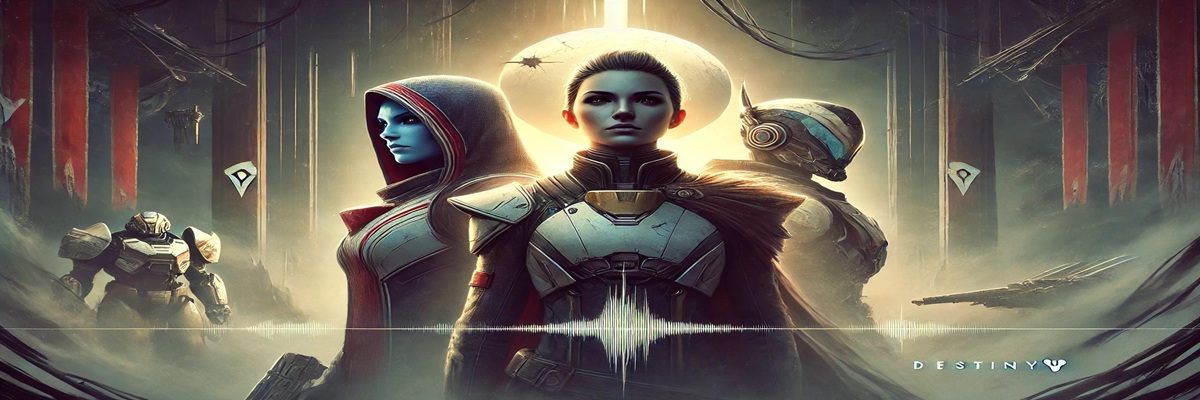
When Destiny 2: The Final Shape launched earlier this summer, fans noticed something was off—some voices didn’t sound quite right. Longtime characters like Ikora Rey and Devrim Kay were speaking with unfamiliar inflections, and several cutscenes included characters with limited or even completely missing dialogue. Now, Bungie is finally breaking its silence and confirming what many suspected: some key voice actors were temporarily replaced, and missing lines were placeholder recordings.
The update comes amid a wave of fan speculation and concern about the studio’s approach to character consistency during one of Destiny’s most pivotal expansions. The Final Shape marks the climax of a story arc nearly a decade in the making. Players were quick to point out that the emotional impact of some key moments felt “muted” or “rushed”—in part because the voices didn’t carry the weight they were used to.
In a recent developer blog and confirmed in community responses, Bungie acknowledged the voice inconsistencies and revealed that several performances were recorded by backup voice actors. The studio attributed the changes to unexpected availability issues with original cast members during the expansion’s production schedule.
While Bungie didn’t specify exactly which actors were temporarily replaced, players recognized changes in familiar characters like Ikora Rey, whose voice—originally provided by Mara Junot in recent expansions—sounded significantly different. Some fans initially feared this meant permanent recasting, but Bungie clarified that re-recordings with the original actors are already underway, and updated versions will be patched into the game soon.
This is a welcome relief for Destiny’s vocal community. As one Reddit user put it, “These voices are like old friends. You notice when something’s changed—especially in the middle of an emotional mission.”
Who Voices Lodi in Destiny 2?
Despite the controversy, one new voice performance has garnered near-universal praise: Lodi, a new character introduced in The Final Shape. Voiced by Tess Masters, an Australian actress known for her work in both film and game voiceover, Lodi has emerged as a standout character. Her warm, reflective tone and grounded delivery give Lodi a sense of wisdom and gravitas that resonates with players—especially in the quieter moments of the story.
Fans online have described Lodi as “the emotional anchor of the expansion,” with many praising Masters’ performance as one of the most compelling new voices in the game’s recent history. Bungie hasn’t officially profiled Masters’ involvement yet, but her name is already circulating widely among fans and casting watchlists.
A Patchwork of Voices—and a Promise to Fix It
The missing and mismatched voice lines weren’t just isolated to Ikora. Characters like Devrim Kay, Ghost, and Eris Morn were also affected, according to players who compared dialogue from previous seasons. Some lines felt flat or out of sync with the emotional tone of the scene. Others were noticeably absent altogether, replaced by silence or unvoiced subtitles—rare in a franchise known for its strong voice acting pedigree.
In response to community feedback, Bungie made it clear that none of this was intentional or final. “Due to scheduling conflicts and late-stage production hurdles, we had to rely on temporary voice coverage,” a Bungie community manager explained on Reddit. “But our goal remains to deliver the best experience possible, including with the original voice cast.” The studio confirmed that updated recordings would be added in upcoming patches and hotfixes.
For a game so rooted in cinematic storytelling, this commitment matters. Over the years, Destiny has become known not only for its evolving gameplay but for its memorable performances—from Lance Reddick’s commanding portrayal of Commander Zavala to the layered emotional work of Erika Ishii as Ana Bray. Voice actors have become extensions of the world itself, with many players forming deep connections to their characters’ voices.
The brief disruption during The Final Shape rollout underscores just how important voice consistency is to players—and to Destiny’s overall narrative cohesion.
Voice Acting as a Core Pillar of Destiny’s Legacy
While it’s common for live-service games to update assets post-launch, voiceover performance has traditionally remained stable, partly because it anchors the player’s emotional journey. Bungie’s transparency on this issue signals a deeper recognition of how essential voice actors are to the Destiny experience—not just as supporting talent, but as core contributors to worldbuilding.
This isn’t the first time Destiny has faced a voice change, either. Early in the game’s lifecycle, Peter Dinklage’s portrayal of Ghost was replaced by Nolan North in a full overhaul. That shift was met with both criticism and praise, but it set the stage for how impactful—and risky—voice transitions can be.
In contrast, this situation feels less like a creative shift and more like a temporary misalignment between intent and logistics. Bungie’s reassurance that original actors are returning has helped soften concerns, though players remain eager for full audio fidelity in such a story-heavy expansion.
As one streamer put it: “You can have great visuals and tight gameplay, but if the voice acting’s off, it pulls you out of the moment. Destiny doesn’t just need good storytelling—it needs the right voices telling it.”
Rebuilding Trust Through Transparency
The community’s reaction to Bungie’s admission has been a mix of disappointment and appreciation. On one hand, many players were frustrated that the issue wasn’t addressed at launch, especially given the emotional weight and long-awaited closure The Final Shape was meant to deliver. On the other hand, fans welcomed Bungie’s candid response and their commitment to restoring the intended voice performances.
The broader conversation sparked by these temporary changes reflects how much voice actors matter to the Destiny 2 experience. In a game spanning multiple expansions, years of lore, and deeply personal character arcs, vocal performances are often the glue that holds emotional continuity together. Even subtle differences in tone or cadence can make the difference between a moving scene and a forgettable one.
It’s also a testament to the performers themselves. Characters like Ikora Rey, Eris Morn, and Zavala are not just digital avatars—they’re personalities brought to life by actors who have grown into their roles over time. These voices have shaped Destiny’s identity just as much as its art direction, music, or gameplay mechanics.
What This Means for Future Expansions
As Destiny moves beyond The Final Shape, this incident could serve as a learning moment not just for Bungie, but for the broader game development community. With performance capture and voiceover now so central to narrative-driven games, ensuring continuity in casting and recording needs to be treated with the same level of planning and precision as gameplay systems or technical polish.
For fans, the promise of hearing the original voice actors reinserted into the game in future patches is reassuring. It restores a sense of narrative consistency, while also honoring the contributions of the actors whose voices have become part of the Destiny legacy.
Meanwhile, the introduction of new talent like Tess Masters as Lodi shows that Bungie is still invested in expanding its voice talent roster thoughtfully. Masters’ performance stands out not only for its delivery, but for how quickly the community embraced it—proof that new characters can thrive in Destiny’s rich lore when given the right voice and writing.
In the end, this situation highlights a truth players already know: in Destiny, a voice isn’t just a sound—it’s a story.
