
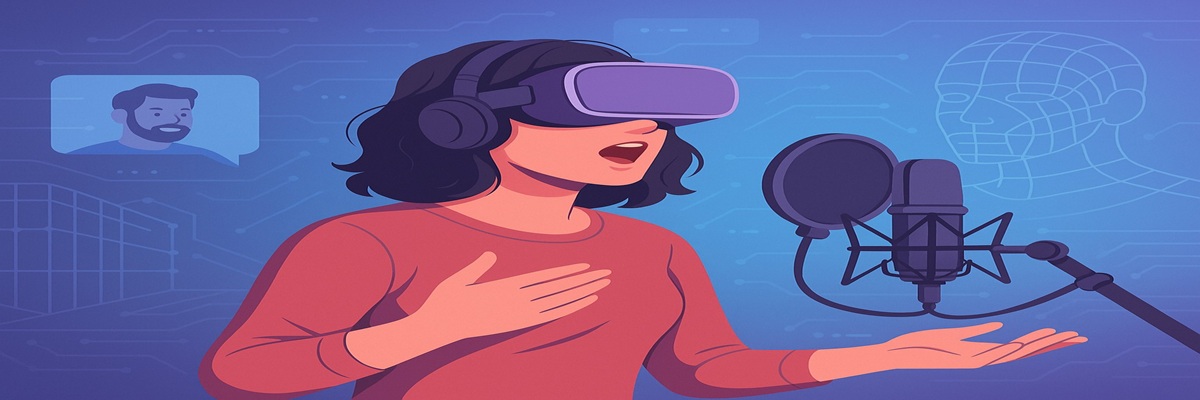
As virtual spaces evolve into fully immersive environments, the metaverse is redefining the way people interact, work, play, and experience entertainment. In 2025, voice actors are emerging as key players in this digital shift — lending their skills to virtual worlds, AI companions, interactive storytelling platforms, and avatar-based performances. But with these new frontiers come unique challenges, particularly in the areas of performance ethics, creative ownership, and evolving expectations.
The role of the voice actor in the metaverse is not simply to record dialogue. It’s to create presence — to breathe life into avatars, characters, and interfaces that live outside the bounds of traditional media. This shift demands new skills, new partnerships, and a thoughtful approach to how voice work is credited, compensated, and protected in an increasingly decentralized landscape.
Defining the Metaverse for Voice Actors
In practical terms, the “metaverse” refers to interconnected virtual platforms where users engage in real-time interaction through avatars. These platforms are built on a mix of gaming engines, social ecosystems, and extended reality (XR) technologies — including VR (virtual reality) and AR (augmented reality).
For voice actors, the metaverse creates opportunities across several key areas:
- Persistent character performance in live virtual spaces
- Interactive dialogue systems for AI or non-playable characters (NPCs)
- Personalized voice services for avatars or branded virtual identities
- Narration for immersive experiences, from virtual tours to interactive fiction
As these applications grow, the demand for adaptive, emotionally attuned voice performances is increasing — and the line between acting and interaction continues to blur.
Live Performance in Persistent Worlds
One of the most exciting (and demanding) aspects of metaverse voice work is live interaction. Some platforms host in-character performers in real time, responding to audience actions or player dialogue. These are not pre-recorded lines — they are improvised performances, often with narrative parameters and emotional targets, delivered live in voice.
Voice actors performing in this capacity are closer to stage or theme park performers than traditional voiceover artists. They must:
- Maintain character over extended periods
- Respond fluidly to unscripted user interaction
- Modulate tone and pace for dynamic virtual environments
- Incorporate gestures or motion capture, depending on the platform
This format requires both vocal stamina and the ability to perform in character while monitoring technical tools (e.g., proximity audio, voice modulation filters, or user presence metrics).
Character Development in Interactive Spaces
Another major opportunity is the design and voicing of NPCs or AI-driven characters in virtual games, hubs, and metaverse applications. These characters may serve as guides, mentors, shopkeepers, or background entities in a digital world. Their role is to create immersion — and a well-performed voice can make the difference between a flat, robotic encounter and an emotionally engaging experience.
Unlike traditional games, these characters are often updated continuously. Scripts are modular, dialogue trees are dynamic, and tone can shift based on user behavior. Voice actors are asked to record lines that:
- Allow for seamless transitions between conversational states
- Remain consistent across multiple user sessions
- Can be recombined or scaled for AI use
This work rewards flexibility and vocal precision — but it also raises questions about creative control and compensation for modular reuse.
Avatars, Identity, and Personal Branding
A growing segment of the metaverse is centered on personalized avatars and voice identity. Users can now purchase or commission custom voices for their digital selves — including voices that sound like them, sound like someone else, or reflect a brand persona.
Some voice actors are being hired to become the “voice of a platform” — for example, a wellness AI that interacts with users daily, or a virtual assistant within a branded virtual space. These roles can be lucrative and long-term, but they also require careful negotiation around licensing, longevity, and exclusivity.
Others are entering this space as performers — creating their own metaverse identities as voice-driven characters, offering live readings, improvisational shows, or interactive scenes in avatar form.
Technical and Ethical Considerations
With all these innovations come significant technical and ethical considerations for voice talent:
- Voice cloning and AI reuse: How are performances protected once recorded? Are actors aware when their voices are re-used, re-pitched, or synthesized?
- Attribution: In open worlds where credits are minimal or dynamic, how do voice actors ensure they are credited and discoverable?
- Residuals and reuse rights: If a recorded performance is used indefinitely across thousands of sessions, should voice actors receive royalties?
- Cultural representation: Are voice actors cast appropriately for characters in virtual spaces that span global cultures and languages?
These questions are increasingly central to union discussions, performance contracts, and platform guidelines.
Training for the Next Generation of Virtual VO
Voice actors looking to enter the metaverse space need more than mic technique. Training now includes:
- Interactive voice design: understanding how voice flows through interactive frameworks
- Improvisation and live response: skills for real-time character work
- Understanding of spatial audio: voice placement in 3D or immersive soundscapes
- Collaboration with developers: working alongside coders, game designers, and experience architects
Workshops, voiceover conferences, and creative incubators are starting to offer training in metaverse performance. In parallel, voice actors are forming networks to share best practices, software tips, and representation strategies.
The Role of Unions and Performer Advocacy
With new formats come new frontiers in advocacy. Organizations like SAG-AFTRA and global voice actor unions are now negotiating how voice work is defined in persistent and virtual environments.
Key concerns include:
- Clear definitions for live and asynchronous VO in metaverse environments
- Guidelines for digital reuse, AI synthesis, and contract renewals
- Recognition for voice actors in virtual experiences presented as “immersive theater” or “interactive installations”
As these conversations evolve, the voiceover community is pushing for protections that honor the labor and creativity that go into even the most modular or AI-assisted performances.
A Future Written in Voice
Voice acting in the metaverse isn’t just a novelty — it’s becoming a critical layer of how people engage with the digital world. From entertainment and commerce to education and emotional support, the presence of a well-performed voice adds trust, clarity, and personality.
The question is no longer if voice actors belong in the metaverse — it’s how they will shape it.
The opportunities are vast, but so are the stakes. With each recorded line, improvised interaction, or synthesized segment, voice actors are redefining digital storytelling — one interaction at a time.
