
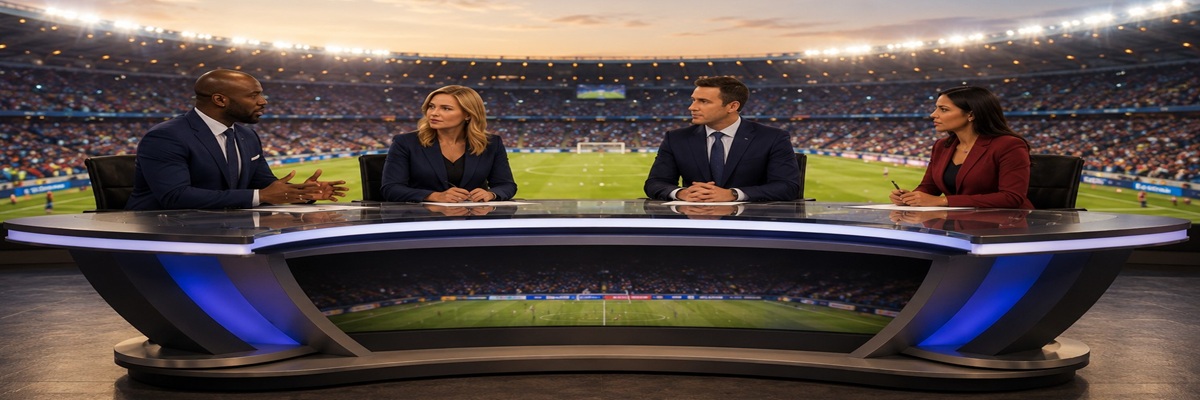
The 2026 FIFA World Cup is underway across the United States, Canada, and Mexico, and millions of fans are already experiencing the tournament through more than the action on the pitch. For viewers watching from home, the voices calling the matches, guiding studio coverage, and explaining the storylines are a major part of the event.
World Cup commentary has always carried special importance. A dramatic goal, a tense penalty, or a major upset can become linked forever with the voice that called it. Long after fans remember the score, they often remember the sound of the moment.
That makes the broadcast teams for the 2026 tournament especially important. With matches spread across three host countries and a global audience following every stage, commentators and studio analysts are helping shape how fans understand the biggest football event in the world.
FOX Sports Leads U.S. English-Language Coverage
For U.S. English-language audiences, FOX Sports is once again one of the central homes of World Cup coverage. The network’s lead match commentary team includes John Strong on play-by-play and Stu Holden as analyst.
Strong has become one of the most recognizable American soccer broadcasters of his generation. His work has covered Major League Soccer, international tournaments, and previous World Cup events. Holden, a former U.S. men’s national team player, brings an analyst’s perspective shaped by his own experience on the field.
Together, the pair gives FOX a familiar lead voice team for major matches. Their chemistry matters because soccer commentary requires balance. The play-by-play voice must follow the rhythm of a match without overwhelming it, while the analyst must explain tactics, momentum, and player decisions in real time.
FOX’s studio coverage is also built around familiar personalities. Rebecca Lowe serves as a lead studio host, bringing experience from years of Premier League and international football coverage. Analysts such as Alexi Lalas, Thierry Henry, and Zlatan Ibrahimović add a mix of American soccer perspective, global star power, and outspoken personality.
Studio coverage plays a different role from live commentary. It sets the stage before kickoff, explains the stakes, reacts to major moments, and keeps casual viewers connected to the tournament’s larger story. For an event as large as the World Cup, those studio voices often become part of the daily viewing routine.
Telemundo Brings Iconic Spanish-Language Voices
For many Spanish-speaking viewers in the United States, Telemundo Deportes remains a major part of the World Cup experience.
One of the most recognizable voices in its coverage is Andrés Cantor. Cantor’s goal calls have become part of football broadcasting history, especially for audiences who associate his voice with the emotion and drama of major international tournaments.
Telemundo’s coverage also includes Luis Omar Tapia and José Luis López Salido among its leading match voices. Each brings a different style to the broadcast, helping the network serve an audience that expects energy, knowledge, and cultural fluency from its World Cup coverage.
Presenters such as Adriana Monsalve and Verónica Rodríguez also help shape Telemundo’s broader tournament programming. Their roles extend beyond match coverage, connecting viewers to storylines, interviews, analysis, and the atmosphere surrounding the tournament.
Spanish-language World Cup coverage carries its own rhythm and tradition. The emotional cadence of a goal call, the speed of live analysis, and the cultural connection between broadcaster and audience all play a role in how fans experience the match. For many viewers, these voices are not secondary to the tournament. They are part of the tournament’s identity.
Canada and Mexico Add Their Own Broadcast Perspectives
Because the 2026 World Cup is shared by three host nations, coverage across Canada and Mexico carries added significance.
In Canada, TSN, CTV, and RDS are central to tournament coverage. English and French-language broadcasts help bring the event to audiences across the country, especially as Canada continues to grow as a football market. With Canada hosting matches and competing on the world stage, local coverage has an added layer of national importance.
In Mexico, major broadcasters including TelevisaUnivision/TUDN and TV Azteca are central to the tournament’s reach. Mexico has one of the richest football broadcasting traditions in the world, and its commentators are often deeply connected to the emotional identity of the national team and domestic audience.
For viewers in Mexico, the World Cup is not simply a global event. It is also a home tournament. That gives the commentary added importance, especially during matches involving Mexico or games played in Mexican host cities.
Across all three countries, broadcasters are doing more than describing what happens. They are translating the scale of the tournament into a viewing experience that feels local, national, and global at the same time.
Commentary Is a Different Kind of Voice Performance
For VoiceActorNews readers, sports broadcasting deserves attention as a voice profession in its own right.
Commentators are not voice actors in the traditional sense, but they rely on many of the same tools. Timing, pacing, tone, breath control, improvisation, emotional awareness, and vocal stamina all matter. A commentator must be prepared, but also flexible enough to react instantly to something no script could predict.
The World Cup raises those demands even higher. A broadcaster may need to explain tactical details to serious fans while keeping newer viewers engaged. They must handle quiet stretches, sudden goals, controversial referee decisions, injuries, celebrations, and emotional endings without losing control of the broadcast.
Studio hosts face a different challenge. They must guide conversation, transition between segments, manage analysts, and keep coverage moving across long tournament days. Analysts must turn experience and opinion into clear, concise explanations that help viewers understand what they just watched.
All of this is voice work. It may not take place in an animation booth, a commercial recording session, or traditional television narration, but it depends on many of the same fundamentals: performance, clarity, timing, and audience connection.
The Voices Fans Will Remember
The 2026 FIFA World Cup will ultimately be defined by the players, teams, goals, and results. Yet for millions watching around the world, those moments will arrive through the voices of broadcasters who translate live action into memory.
John Strong and Stu Holden will help guide English-language viewers through key matches. Rebecca Lowe, Alexi Lalas, Thierry Henry, and Zlatan Ibrahimović will shape the studio conversation. Andrés Cantor, Luis Omar Tapia, José Luis López Salido, Adriana Monsalve, and Verónica Rodríguez will help bring Spanish-language audiences closer to the tournament’s biggest moments.
Across Canada and Mexico, local broadcast teams will add their own voices, perspectives, and traditions to the event.
The World Cup is often remembered through images: a winning goal, a stunned crowd, a captain lifting the trophy. But sound matters just as much. A great call can turn a moment into history, and the voices behind this tournament are already helping tell the story of football’s biggest stage.
