
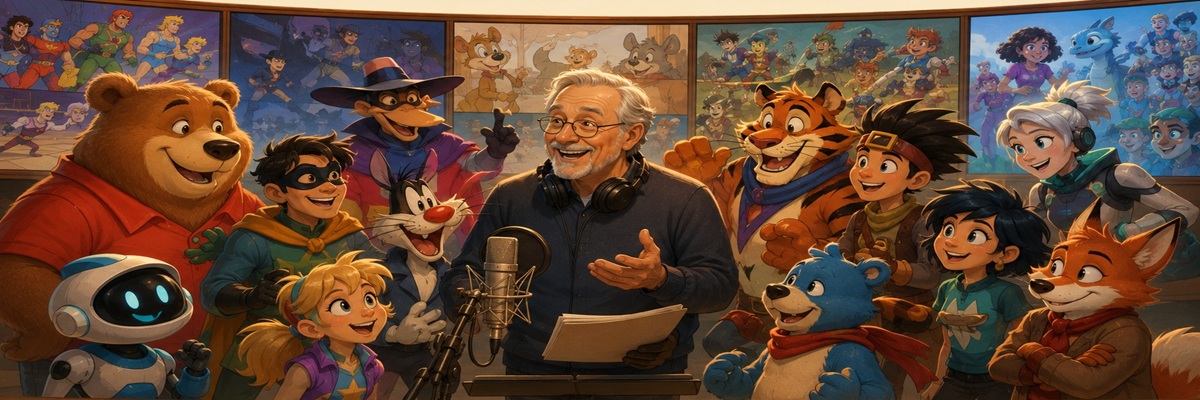
Few voice actors have remained as consistently relevant across multiple generations of animation as Jim Cummings. For more than forty years, audiences have heard his performances in television series, animated films, video games, theme park attractions, and streaming content. While many performers become associated with a single era or a handful of memorable roles, Cummings built a career that stretches across some of the most significant periods in modern animation history.
That longevity makes his career particularly interesting. Rather than simply examining the accomplishments of one performer, looking at Cummings’ body of work provides a unique way to trace the evolution of animation itself. From the rise of syndicated television cartoons in the late 1980s to today’s streaming-driven entertainment landscape, he has remained a constant presence while the industry around him transformed repeatedly.
Technology changed. Distribution changed. Audience habits changed. Yet through every shift, memorable character performances remained at the center of successful animation. Few careers illustrate that reality better than Jim Cummings’.
The Disney Afternoon Helped Shape a Generation
To understand Cummings’ place in animation history, it helps to revisit one of the most important periods in television animation. During the late 1980s and early 1990s, Disney dramatically expanded its television animation efforts through a block of syndicated programming that became known as the Disney Afternoon.
Shows such as DuckTales, Chip ‘n Dale Rescue Rangers, TaleSpin, and Darkwing Duck helped elevate expectations for television cartoons. They featured stronger writing, higher production values, and more developed characters than many animated programs that had come before them. For millions of children, these series became daily viewing habits.
Cummings became an important part of that era. His work appeared across several of Disney’s most successful animated properties, helping establish characters that remain recognizable decades later. At a time when television animation was becoming increasingly ambitious, voice actors were playing a larger role in defining how audiences connected with these characters.
The Disney Afternoon also helped change public perception of animated television. Cartoons were no longer viewed solely as disposable children’s entertainment. Studios began investing more resources into storytelling, world-building, and character development. Voice performances became a critical part of that effort.
Many of the shows from this period continue to attract audiences through streaming services, home media collections, and nostalgic revisits. As a result, new viewers continue discovering performances that originally debuted more than thirty years ago.
Becoming the Voice of Beloved Characters
While the Disney Afternoon established Cummings as an important talent within animation, some of his most influential work came through characters that carried enormous expectations.
Among the most notable examples are Winnie the Pooh and Tigger. These were not simply popular animated characters. They were globally recognized cultural icons with decades of history and generations of devoted fans. Any performer stepping into those roles faced the challenge of maintaining continuity while still delivering authentic performances.
The success of Cummings’ work in those roles speaks to one of the defining qualities of great voice acting. Audiences rarely focus on technical skill when they connect with a character. They focus on whether the character feels genuine. The best voice performances disappear into the role itself.
Through films, television projects, specials, and various Disney productions, Cummings helped ensure that these characters remained familiar to audiences across multiple generations. Children who encountered Pooh and Tigger in the 1990s often introduced those same characters to their own children years later.
This type of longevity is relatively rare. Many animated shows enjoy brief popularity before fading from public attention. Characters like Winnie the Pooh endure because each generation of performers, writers, and artists successfully preserves what made them special in the first place.
Adapting to an Industry in Constant Change
One of the most impressive aspects of Cummings’ career is not simply the number of roles he has performed, but the number of industry changes he successfully navigated.
Animation in the late 1980s looked very different from animation today. Traditional hand-drawn television series dominated much of the landscape. Production methods relied heavily on established broadcasting models. Streaming platforms did not exist, and video game voice acting was still developing into a major industry.
Over the following decades, animation experienced several major shifts. Cable television expanded opportunities for animated programming. Direct-to-video productions became an important market. Video game storytelling grew increasingly sophisticated, creating new demand for voice performers. CGI animation became more common. Eventually, streaming platforms transformed how audiences discovered and consumed content.
Many performers found themselves closely associated with specific periods of animation history. Some struggled to adapt as audience tastes and production methods evolved. Cummings, however, continued finding opportunities across multiple formats and generations of projects.
His career demonstrates an important truth about voice acting. Success often depends as much on adaptability as talent. Performers who remain active over long periods frequently show a willingness to evolve alongside the industry rather than resisting change.
This adaptability helped Cummings remain relevant even as entirely new audiences emerged.
The Rise of the Modern Voice Acting Profession
Another major transformation during Cummings’ career involved the visibility of voice actors themselves.
For much of animation history, voice performers received relatively little public attention compared to on-screen actors. Fans often knew the characters but not the people who portrayed them. Industry recognition largely remained within professional circles.
That began changing during the 1990s and accelerated in the decades that followed. Fan conventions expanded. The internet made information about performers more accessible. Social media created direct connections between artists and audiences. Behind-the-scenes features gave viewers greater insight into the creative process.
Voice actors gradually became public figures in ways that were uncommon during earlier periods. Fans started following specific performers across multiple projects. Convention appearances became major attractions. Industry interviews and podcasts introduced audiences to the people behind their favorite characters.
Cummings experienced this transformation firsthand. His career spans both the era when voice actors worked largely outside public view and the modern environment where performers often maintain active relationships with fans.
This shift has benefited the profession in many ways. Greater visibility has increased appreciation for voice acting as a craft while helping audiences understand the talent involved in creating memorable characters.
Why Some Characters Never Leave Popular Culture
A recurring theme throughout animation history is the remarkable staying power of certain characters. While countless cartoons have come and gone, some figures continue appearing across decades of media.
Several of Cummings’ most famous roles fall into this category. Characters such as Winnie the Pooh, Tigger, Pete, and Darkwing Duck have demonstrated an ability to remain relevant long after their original appearances. They survive through reruns, streaming platforms, merchandise, books, games, theme parks, and new productions.
The continued popularity of these characters highlights the importance of consistency. Audiences form emotional attachments that can last for years. Strong voice performances help maintain those connections even as creative teams and production methods change.
These enduring characters also create something unusual within entertainment. Different generations often share the same cultural reference points. Parents, children, and grandparents may all recognize the same character despite discovering them through entirely different media experiences.
Voice actors play a critical role in preserving that continuity. Their performances help bridge the gap between past and present versions of beloved characters.
What Jim Cummings’ Career Says About Animation’s Future
Animation continues evolving at a rapid pace. Streaming services compete for original content. International productions reach global audiences more easily than ever before. New technologies influence production workflows and audience expectations.
Despite these changes, one element remains remarkably consistent. Audiences continue responding to memorable characters and strong performances.
The tools used to create animation may change, but storytelling still depends on convincing personalities that viewers care about. Voice actors remain essential to that process. Their performances provide emotion, humor, warmth, and authenticity that technology alone cannot replicate.
Jim Cummings’ career serves as a reminder of this enduring reality. Over four decades, he worked through some of the most significant changes the animation industry has experienced. Yet the foundation of his success remained surprisingly simple: creating characters audiences wanted to spend time with.
As animation moves into its next era, that lesson is likely to remain just as relevant as it was when Cummings first entered the industry. Platforms may evolve and technologies may advance, but memorable characters will continue to define the medium. Through hundreds of performances across multiple generations, Jim Cummings helped prove that great character acting never goes out of style.
