
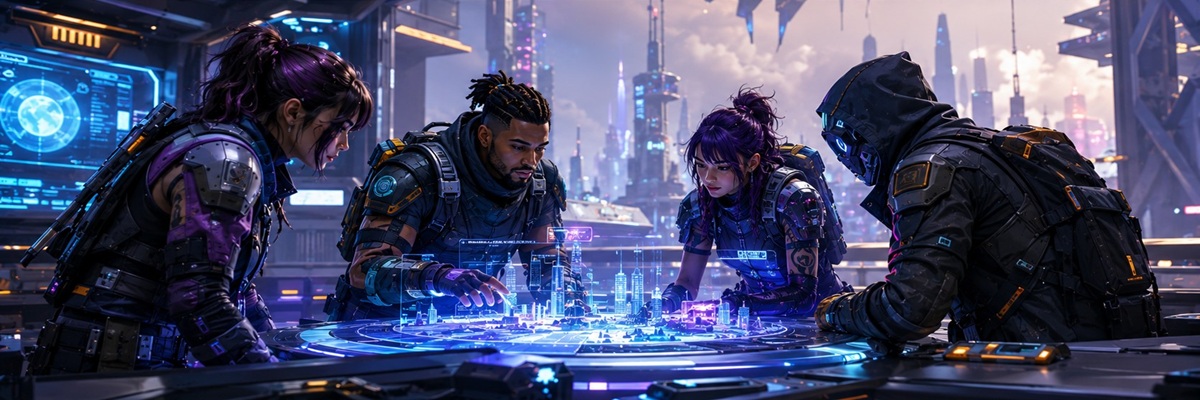
When Bungie officially revealed the principal cast for Marathon on January 19, 2026, the announcement immediately shifted the public conversation surrounding the game. Until then, much of the discussion around Marathon centered on Bungie’s future after Destiny, concerns about the crowded extraction-shooter market, and Sony’s enormous financial investment in the studio. The cast reveal changed the tone entirely because audiences suddenly realized Bungie was building the project around recognizable performance talent rather than treating voice acting as secondary support for multiplayer gameplay.
The announced lineup included Jennifer English, Ben Starr, Elias Toufexis, Erica Lindbeck, Nika Futterman, Donnla Hughes, and David Menkin, creating instant crossover recognition with franchises such as Baldur’s Gate 3, Final Fantasy XVI, Deus Ex, Cyberpunk 2077, League of Legends, Star Wars: The Clone Wars, Horizon Forbidden West, and Clair Obscur: Expedition 33. The reveal generated attention partly because nearly every major actor attached to the game already carried strong emotional association with other major narrative-driven projects.
The timing of the announcement also mattered. Bungie was attempting to reassure audiences that Marathon would become more than simply another competitive live-service shooter. The studio repeatedly emphasized long-term storytelling plans throughout early 2026, and the casting choices reinforced those ambitions clearly. Rather than building the game around anonymous military-style archetypes, Bungie assembled actors known for emotionally layered performances and strong character identity.
More recently, the conversation surrounding the cast took another turn after veteran actor Elias Toufexis publicly responded to growing online hostility directed toward the game and its performers. His comments, which circulated widely in May 2026 across IGN, GameSpot, and other gaming outlets, highlighted how voice actors increasingly find themselves pulled directly into the emotional volatility surrounding major live-service franchises.
Bungie Built Marathon Around Recognizable Performance Talent
The cast Bungie revealed in January immediately stood out because of how heavily it leaned into actors already associated with prestige storytelling projects. Jennifer English became one of the breakout stars of Baldur’s Gate 3 after her performance as Shadowheart earned widespread praise and built a massive online fan following. Since the RPG’s release in 2023, English has become closely associated with emotionally complex fantasy performances and character-driven storytelling.
Ben Starr brought similar recognition to Marathon. His performance as Clive Rosfield in Final Fantasy XVI established him as one of the most prominent dramatic performers in modern gaming, while his later appearance in Clair Obscur: Expedition 33 further strengthened his reputation among players who follow cinematic RPG storytelling closely. Starr’s involvement immediately suggested Bungie wanted Marathon to carry a much stronger narrative identity than audiences traditionally associate with extraction shooters.
Elias Toufexis already carried enormous recognition through his portrayal of Adam Jensen in the Deus Ex franchise, where his restrained cyberpunk performance became one of the defining voices in modern sci-fi gaming. Erica Lindbeck brought another major layer of familiarity because of her extensive work across gaming and animation, including projects connected to Persona 5, Cyberpunk 2077, League of Legends, and Genshin Impact. Nika Futterman added strong animation and franchise credibility through roles in Star Wars: The Clone Wars and numerous animated series, while David Menkin and Donnla Hughes further expanded the cast’s dramatic range through major gaming and television performances.
The overall casting strategy felt deliberate. Bungie was not simply hiring performers to record mission dialogue or combat callouts. The studio appeared to be constructing a long-term narrative universe built around recognizable character performances that players could emotionally follow over multiple years.
That approach reflects how dramatically audience expectations around multiplayer games changed during the last decade.
Earlier online shooters rarely treated voice acting as a major selling point because gameplay systems remained the primary attraction. Modern live-service games increasingly function differently. Titles such as Destiny, Apex Legends, Overwatch, and Valorant demonstrated that players often form strong emotional attachments to recurring characters, particularly when voice performances remain consistent over long storytelling cycles.
Bungie itself helped shape many of those expectations through Destiny. Performers like Lance Reddick became deeply tied to the emotional identity of the franchise itself, with fans strongly associating specific characters with the actors portraying them. Following Reddick’s passing in 2023, the public reaction demonstrated just how emotionally important long-running voice performances became within modern gaming communities.
The Marathon cast reveal suggested Bungie fully understood that reality.
Modern Voice Actors Became Central to Franchise Identity
One reason the Marathon cast announcement generated so much attention is that modern gaming audiences increasingly follow performers themselves across different projects. Players familiar with Baldur’s Gate 3, Final Fantasy XVI, Cyberpunk 2077, or Deus Ex already bring emotional expectations attached to those actors into new games automatically.
Voice actors are no longer invisible contributors quietly working behind the scenes. Many now function as recognizable public personalities with substantial online followings, convention appearances, livestream communities, and direct social-media relationships with fans. Their involvement can shape audience perception of a game long before release.
That visibility also creates new pressures.
As gaming fandoms became more socially connected through YouTube, Reddit, TikTok, Twitch, and Twitter/X, actors increasingly found themselves directly exposed to community frustration surrounding games, publishers, monetization systems, or creative decisions they had no control over. Voice actors working on live-service titles often experience the same emotional backlash cycles traditionally aimed only at developers or studios.
That issue became part of the Marathon conversation again in May 2026 after Elias Toufexis publicly addressed negativity surrounding the game online. According to reports published by IGN and other outlets, Toufexis criticized what he described as constant hostility from online users who appeared determined to attack the project regardless of what Bungie revealed publicly. He argued that some people simply “want to hate” modern gaming projects and warned against directing that frustration toward performers.
His comments resonated widely because they reflected a larger industry issue affecting actors across gaming and animation. Modern performers are expected to remain highly accessible online while simultaneously absorbing enormous emotional reactions connected to franchises themselves. In some cases, actors become symbolic stand-ins for broader player frustrations surrounding publishers, monetization strategies, or changing game genres.
The situation surrounding Marathon demonstrates how central voice acting became to the identity of modern multiplayer games. Bungie’s January 2026 cast reveal succeeded because audiences immediately recognized and emotionally connected with the performers involved. At the same time, that visibility means actors increasingly inherit the emotional volatility attached to major online franchises.
For Bungie, the cast announcement reinforced the studio’s long-term ambitions for Marathon as an evolving narrative-driven universe rather than simply another multiplayer shooter competing for seasonal engagement. The company clearly wants players invested not only in gameplay systems, but also in recurring characters and performances that can sustain emotional attachment over multiple years.
That strategy also reflects a much larger shift happening across the gaming industry itself. Modern multiplayer franchises increasingly depend on recognizable voice performances to maintain long-term audience investment, especially as live-service storytelling becomes more cinematic and character-focused. In that environment, actors are no longer supporting the franchise quietly in the background. They increasingly become part of the franchise’s identity itself.
