
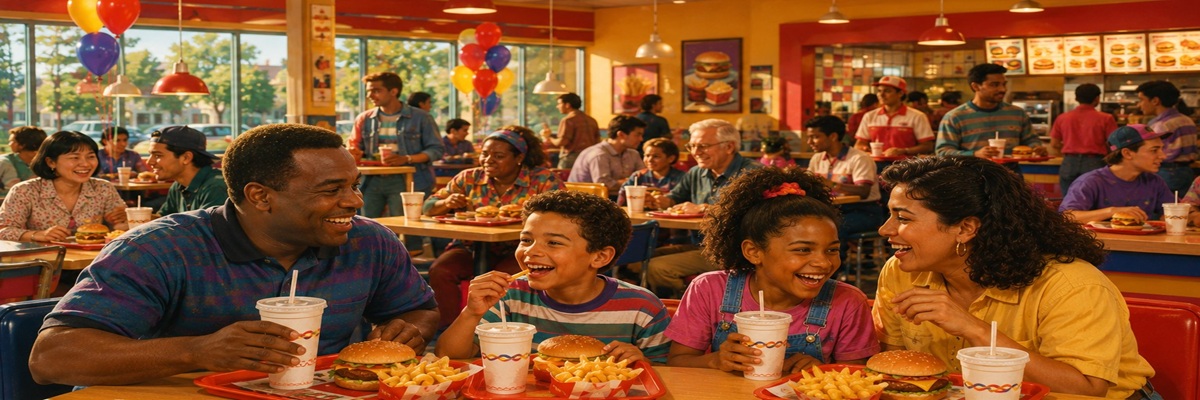
Fast-food advertising has always depended heavily on familiarity. Restaurant chains do not simply compete for attention through menu items or promotions. They compete for emotional recognition. The most successful brands are often the ones audiences instinctively trust before the commercial even finishes playing. Over time, that trust becomes tied not only to logos and slogans, but also to sound, narration style, emotional tone, and the overall feeling a commercial creates.
Few restaurant companies understood this more effectively than McDonald’s.
Across decades of television, radio, and digital advertising, McDonald’s built one of the most recognizable emotional identities in commercial history through consistent voiceover strategies focused on warmth, familiarity, and emotional reassurance. While many fast-food brands emphasized aggressive promotions or high-energy salesmanship, McDonald’s often approached advertising differently. The company’s commercials frequently prioritized comfort, family connection, nostalgia, and emotional consistency over pure promotional intensity.
That consistency became one of the company’s greatest advertising strengths.
McDonald’s commercials rarely sounded emotionally threatening or disruptive. Instead, the brand cultivated narration styles designed to feel safe, welcoming, and universally recognizable across multiple generations and international markets. In many ways, the company helped demonstrate how commercial voiceover could function as emotional infrastructure rather than simply a sales tool.
Earlier Restaurant Advertising Focused on Comfort and Familiarity
Restaurant advertising throughout the late twentieth century often centered around family dining, neighborhood familiarity, and emotionally reassuring presentation. McDonald’s became particularly successful at this approach because the company understood that fast-food commercials did not always need to feel loud or aggressively promotional in order to remain memorable.
Earlier McDonald’s campaigns frequently emphasized family outings, childhood excitement, friendly service, and community-oriented imagery while announcers delivered narration with softer and warmer emotional tones than many competitors. Even when commercials remained upbeat and energetic, the performances usually avoided the sharper promotional aggression common throughout much of the fast-food industry.
Campaigns built around slogans like “You Deserve a Break Today” helped reinforce this emotional positioning. Rather than focusing exclusively on product urgency or value promotions, the advertising framed McDonald’s as part of everyday comfort and familiarity. The narration itself became central to that emotional association because the voiceovers consistently sounded reassuring, approachable, and emotionally safe.
The Ronald McDonald era further strengthened this identity. Commercials built around Ronald McDonald and related characters targeted children directly, but they also reinforced broader emotional themes centered around joy, comfort, playfulness, and family familiarity. Voice performances associated with those campaigns were intentionally friendly and welcoming because the company wanted audiences to associate McDonald’s with emotional consistency across childhood experiences.
Unlike some competitors that relied heavily on announcer-style projection, McDonald’s commercials often sounded softer and more conversational. The performances rarely attempted to overwhelm viewers through volume alone. Instead, the narration worked by creating emotional familiarity over time through repetition and tonal consistency.
This approach helped the company establish a long-term emotional connection with audiences that extended far beyond individual menu promotions. McDonald’s advertising increasingly became associated with a particular emotional atmosphere rather than simply a restaurant transaction.
That emotional consistency later evolved into one of the strongest examples of sonic branding in modern advertising.
McDonald’s Built One of the Most Recognizable Audio Identities in Advertising
One of the most important developments in modern restaurant advertising was the realization that brands could create emotional recognition through sound itself. McDonald’s became one of the clearest examples of this strategy through decades of carefully managed sonic branding designed to feel instantly familiar across multiple countries and generations.
The company’s “I’m Lovin’ It” campaign became one of the most recognizable advertising identities in the world partly because it combined music, repetition, and emotionally accessible narration into a globally consistent audio experience. The campaign’s musical signature, originally connected to Justin Timberlake during its early rollout, demonstrated how commercial audio branding could create immediate emotional recognition before audiences even processed the visuals on screen.
That strategy extended beyond slogans and jingles.
McDonald’s commercials increasingly used narration styles designed to reinforce emotional continuity across different campaigns. Whether the ad focused on breakfast, late-night meals, family moments, sports partnerships, or celebrity collaborations, the voiceover usually maintained a warm and emotionally accessible tone. The narration rarely sounded confrontational or overly theatrical because the brand’s primary objective was long-term emotional familiarity rather than short-term promotional intensity.
Celebrity involvement also became an important part of this evolution. More recent McDonald’s campaigns involving actors like Brian Cox introduced recognizable voices that carried cultural familiarity and emotional association beyond the restaurant industry itself. Cox’s narration style brought authority and personality while still fitting within the company’s broader emphasis on warmth and accessibility.
At the same time, McDonald’s adapted its voiceover approach globally by working with localized performers capable of maintaining the brand’s emotional tone while adjusting for cultural differences. Commercials in different countries often used different languages, accents, and regional personalities, but the emotional rhythm of the advertising remained surprisingly consistent worldwide.
That emotional consistency became central to the company’s identity.
Viewers often recognized a McDonald’s commercial emotionally before consciously identifying the brand visually. The pacing, narration style, musical structure, and emotional atmosphere all contributed to a highly recognizable commercial identity that transcended individual campaigns.
Emotional Narration Became Central to Modern Food Advertising
As advertising evolved during the streaming and social-media era, McDonald’s increasingly shifted toward emotionally driven storytelling rather than straightforward product promotion. Commercials began focusing more heavily on human experiences connected to the brand itself rather than simply describing menu items or pricing.
Campaigns centered around childhood memories, road trips, friendships, late-night meals, sports celebrations, and family moments became increasingly common. The commercials often treated McDonald’s less as a restaurant and more as an emotional setting tied to shared experiences and personal routines.
Voiceover evolved alongside those storytelling priorities.
Narration became calmer, more cinematic, and more emotionally restrained compared to older fast-food advertising styles. Rather than using constant promotional intensity, many McDonald’s commercials relied on gentle conversational delivery, smile-through-the-voice warmth, and emotionally reassuring pacing designed to reinforce comfort and familiarity.
This style required a very different type of commercial performance than traditional announcer advertising.
Earlier restaurant commercials often depended on speed, projection, and vocal dominance. Emotion-driven campaigns rely much more heavily on subtle pacing, emotional sincerity, and tonal consistency. The voice actor’s job becomes less about aggressively selling the food and more about guiding the emotional atmosphere of the commercial itself.
McDonald’s became especially effective at this approach because the brand rarely positioned itself as emotionally disruptive. Unlike companies experimenting with sarcasm, surrealism, or intentionally awkward humor, McDonald’s generally maintained an emotionally safe and universally accessible tone even as media culture became more fragmented and internet-driven.
That emotional stability became part of the brand’s value.
Audiences associated McDonald’s commercials with familiarity, routine, comfort, and emotional predictability in ways that extended beyond the products themselves. The voiceover helped reinforce those associations consistently across decades of advertising evolution.
Global Branding Changed the Role of Commercial Voiceover
One of the most difficult challenges in global advertising is maintaining emotional consistency across different cultures and languages. McDonald’s became one of the strongest examples of how commercial voiceover could help solve that challenge by creating recognizable emotional patterns that remained effective even when the specific voices changed regionally.
The company’s advertising needed to feel emotionally familiar whether audiences encountered it in North America, Europe, Asia, or other international markets. That required balancing localized cultural adaptation with globally recognizable emotional branding.
Voiceover became one of the most important tools for maintaining that balance.
McDonald’s commercials often use local voice actors capable of sounding culturally authentic while still preserving the broader emotional identity associated with the brand. Narration generally remains warm, welcoming, conversational, and emotionally reassuring regardless of the language or market involved.
This consistency helped reinforce trust.
Familiar vocal rhythms create emotional memory over time, and repetition strengthens audience recognition even when viewers are not consciously focusing on the narration itself. McDonald’s understood that audiences often respond emotionally to tone before processing the actual advertising message.
The company also recognized that emotional familiarity creates long-term brand loyalty more effectively than constant promotional urgency alone. Commercial narration therefore became part of a larger emotional framework designed to reinforce reliability, comfort, and universal accessibility across generations of viewers.
That strategy helped McDonald’s maintain one of the strongest global commercial identities in modern advertising history.
Streaming and Social Media Changed the Brand’s Advertising Tone
Modern media culture forced nearly every major restaurant brand to adapt its advertising style to streaming platforms, social media environments, and influencer-driven marketing. McDonald’s adjusted to these changes while still preserving the emotional familiarity that defined its broader commercial identity.
The company embraced celebrity meal campaigns, sports partnerships, anime-inspired advertising, meme culture, and influencer collaborations while maintaining narration styles that still felt emotionally recognizable as “McDonald’s” advertising. Campaigns involving Travis Scott, BTS, and other high-profile cultural figures reflected a more flexible and socially aware marketing strategy designed to connect with younger audiences across digital platforms.
Even as the visuals and campaign structures evolved, the emotional tone remained relatively consistent.
Narration generally stayed relaxed, approachable, and emotionally welcoming rather than aggressively ironic or disruptive. Unlike brands that fully embraced sarcasm or surreal advertising, McDonald’s largely preserved its reputation for emotional familiarity while adapting visually and culturally to changing media environments.
This balance became one of the company’s greatest advertising strengths. McDonald’s commercials could evolve stylistically without losing the emotional tone audiences already associated with the brand. Voiceover helped maintain that continuity across major cultural and technological shifts.
McDonald’s Turned Voiceover Into Emotional Infrastructure
Restaurant advertising still depends heavily on voiceover because narration shapes emotional perception, but McDonald’s demonstrated that commercial narration could function as something much larger than a promotional tool. Over time, the company transformed voiceover into a form of emotional infrastructure supporting global recognition, familiarity, and trust across multiple generations.
Earlier campaigns focused heavily on family comfort, emotional reassurance, and neighborhood familiarity while maintaining softer and more approachable narration styles than many competitors. Later campaigns expanded those emotional strategies globally through sonic branding, celebrity partnerships, localized narration, and cinematic storytelling that preserved the company’s core emotional identity even as media culture evolved dramatically.
This consistency helped McDonald’s build one of the most recognizable commercial identities in the world.
Modern restaurant advertising increasingly depends on emotional familiarity rather than pure promotional intensity because audiences respond more strongly to brands that feel emotionally recognizable over long periods of time. McDonald’s helped define how commercial voiceover could reinforce those emotional relationships through warmth, repetition, and tonal consistency rather than constant salesmanship.
The company’s commercials rarely needed to sound aggressive in order to remain memorable. Their power often came from sounding familiar enough that audiences instinctively trusted the emotional atmosphere before the advertisement even fully unfolded.
