
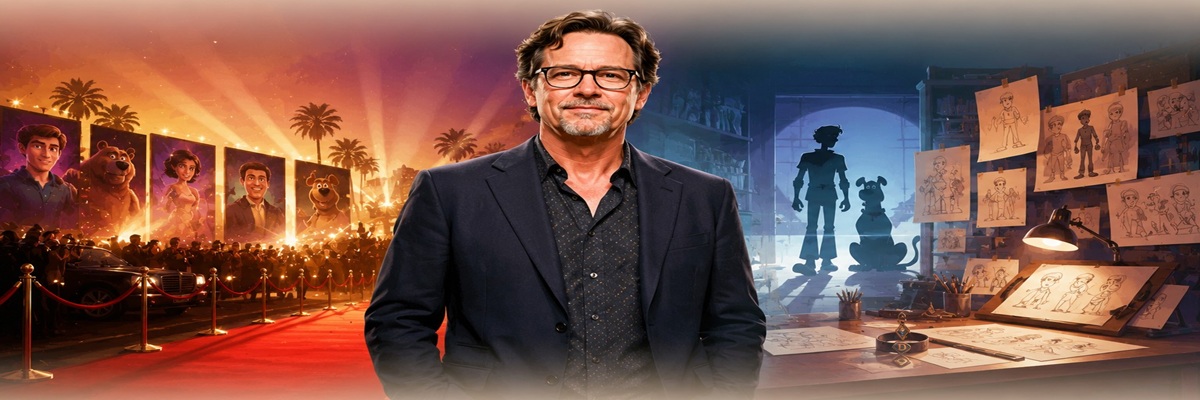
Matthew Lillard has spent more than two decades tied to one of animation’s most recognizable characters. After first playing Shaggy Rogers in the live-action Scooby-Doo films, he eventually became the character’s primary voice actor across television series, movies, and specials. That history is one reason why his recent comments about Hollywood voice casting practices have resonated with so many fans.
Lillard’s criticism was not simply about losing a role. Instead, it touched on a debate that has been growing for years across animation voice acting circles. As studios increasingly turn to celebrity casting for major animated projects, many professional voice actors have questioned whether experience in the craft is being overlooked in favor of star power.
For Lillard, the discussion is personal. His own journey from live-action actor to respected voice performer has given him a unique perspective on both sides of the industry.
Hollywood’s Celebrity Voice Casting Debate Isn’t Going Away
The conversation gained renewed attention after Lillard reflected on being replaced as Shaggy in Warner Bros.’ 2020 animated film Scoob!. Although he had voiced the character for years, the studio instead cast actor and comedian Will Forte in the role. The decision became one of the most discussed examples of celebrity recasting in modern animation.
Lillard has since spoken openly about the experience and used it as a larger example of how Hollywood approaches animated productions. His comments in 2026 reignited discussion among voice actors and animation fans who believe established performers are often replaced by recognizable celebrities intended to boost marketing campaigns.
The debate is hardly new. Animated films regularly feature major Hollywood names in prominent roles, and studios frequently promote those actors as a central part of a movie’s advertising strategy. Supporters argue that recognizable celebrities help attract audiences. Critics counter that voice acting is a specialized skill developed over years of performance work.
What makes Lillard’s perspective notable is that he occupies both worlds. He is not a traditional voice actor who entered the industry through animation. He is also not simply a celebrity making occasional animated appearances. Instead, he became deeply associated with a character across multiple generations of viewers.
That long connection has helped make him one of the most beloved versions of Shaggy. Many fans who grew up watching the live-action films later followed him into the animated franchise, creating a rare situation where the same performer successfully bridged both formats.
The discussion surrounding celebrity casting continues to surface whenever major animated projects announce new casts. For voice actors, the concern is often less about individual performers and more about the broader trend of replacing experienced talent with marketable names. Lillard’s comments have become one of the most visible examples of that ongoing conversation.
From Live-Action Star to One of Animation’s Most Recognizable Voices
Long before he became a fixture in the Scooby-Doo franchise, Lillard built a reputation through live-action projects that included Scream, Hackers, She’s All That, and The Perfect Score. His energetic screen presence helped make him a familiar face throughout the late 1990s and early 2000s.
The turning point came in 2002 when he was cast as Shaggy in the live-action Scooby-Doo movie. His performance was widely praised by fans, many of whom felt he captured the spirit of the animated character remarkably well.
That connection became even more significant after legendary voice actor Casey Kasem stepped away from the role. Lillard eventually inherited the voice of Shaggy and went on to portray the character across numerous animated productions.
Unlike many actors who occasionally lend their voices to animated projects, Lillard fully embraced voice acting as a major part of his career. Over time, audiences began associating him with Shaggy just as strongly as they associated him with his live-action work.
The longevity of that relationship helped establish him as one of the defining performers in the franchise’s modern era. Few actors have maintained such a consistent connection to a major animated character across so many years and formats.
Why 2026 Has Been a Major Year for Matthew Lillard
While his comments about voice casting generated headlines, 2026 has also been one of Lillard’s busiest years in recent memory.
One of the biggest announcements arrived when Warner Bros. Animation and Tubi revealed Yokoso Scooby-Doo!, the franchise’s first original anime series. The project will once again feature Lillard as Shaggy alongside longtime Scooby-Doo voice actor Frank Welker. The series takes the characters to Japan and represents one of the most ambitious reinventions in the franchise’s history.
His continued involvement demonstrates that despite past frustrations, he remains a central figure within the Scooby-Doo universe. The anime announcement was widely celebrated by fans who view Lillard as the definitive modern voice of Shaggy.
Lillard has also remained highly visible through convention appearances, interviews, and fan events. His enduring connection with the Scooby-Doo community was highlighted again in 2026 through public appearances that showcased the franchise’s multigenerational fanbase.
Outside animation, Lillard continues to expand his film and television résumé. Recent headlines have linked him to major upcoming projects, including a role in DC’s developing Man of Tomorrow film.
He has also remained connected to another franchise that helped define his career. Discussions surrounding Scream 7 have brought renewed attention to his legacy within the horror series, introducing his work to a younger generation of fans.
Matthew Lillard’s Career Reinvention Continues to Pay Off
Many actors struggle to remain relevant across multiple decades of entertainment. Lillard has managed to do so by continually adapting while maintaining strong connections to the roles audiences love most.
His career has evolved from cult-favorite films and teen comedies into voice acting, horror franchises, convention appearances, and major studio productions. Along the way, he has become an unusual success story within the entertainment industry.
The same actor who once played Shaggy on screen is now viewed by many fans as the character’s defining modern voice. That distinction gives added weight to his opinions on how animation casting decisions are made.
Whether audiences agree with his criticism or not, Lillard’s comments have sparked a conversation that extends far beyond a single role. They touch on questions about artistic expertise, industry priorities, and the value of performers who dedicate years to mastering voice acting.
As new Scooby-Doo projects continue to move forward and Hollywood’s casting practices remain under scrutiny, Matthew Lillard’s perspective is likely to remain part of that discussion for years to come.
