
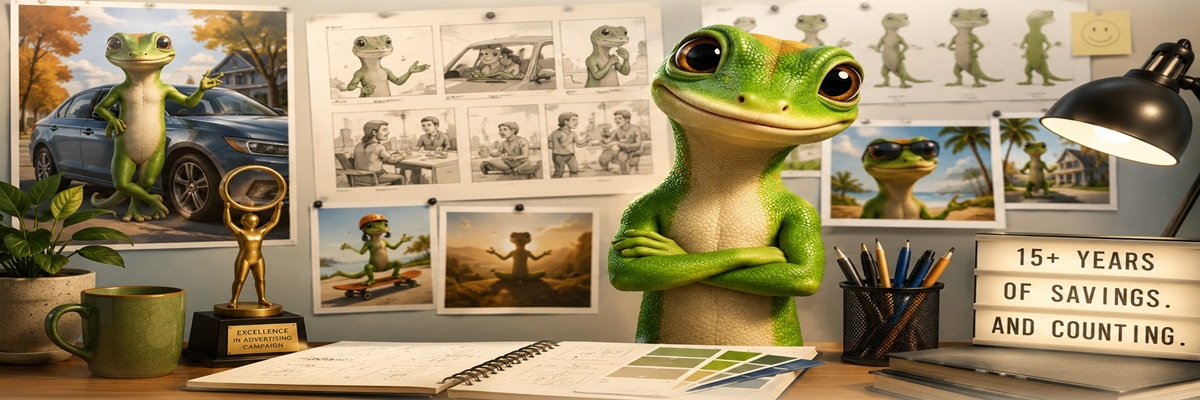
Few advertising mascots have managed to remain relevant for more than two decades. Consumer habits change, marketing trends evolve, and campaigns that once seemed fresh often disappear after only a few years. Yet one small green gecko has somehow survived multiple eras of advertising while becoming one of the most recognizable characters in television commercials.
The Geico Gecko first appeared in 1999 and quickly became much more than a one-off marketing experiment. Today, the character stands alongside a small group of advertising icons that have successfully crossed generations, maintaining relevance in a media landscape that looks dramatically different from the one in which they were created.
While the Gecko’s success is often credited to clever writing and memorable campaign concepts, another factor deserves attention: performance. The character’s longevity has been shaped by the actors who brought him to life, helping transform a simple mascot into a personality audiences continue to recognize years after first meeting him.
In many ways, the Geico Gecko represents one of the most successful examples of character-driven advertising ever created.
A Mascot Created Almost by Accident
The origins of the Geico Gecko are surprisingly simple. During the late 1990s, Geico was searching for ways to increase brand awareness in a crowded insurance market. One challenge was that consumers frequently misheard or misspelled the company’s name. The similarity between “Geico” and “gecko” eventually inspired a creative solution.
Rather than fighting the confusion, the company decided to embrace it.
The result was a small animated gecko who could introduce himself directly to audiences while helping reinforce the correct pronunciation of the brand name. The concept was straightforward, but its timing proved ideal. Advertising was increasingly moving toward character-driven campaigns capable of creating stronger emotional connections than traditional sales-focused commercials.
The Gecko quickly became more than a visual mascot. Audiences responded to the character’s personality, humor, and charm. Instead of functioning solely as a marketing tool, the gecko began to feel like a recognizable character with his own identity.
That distinction would prove critical to the campaign’s long-term success.
Many advertising mascots are memorable for a short period before fading away. The Gecko endured because audiences were not simply remembering a design. They were remembering a personality.
The Voices Behind the Gecko
One reason the character developed such a strong identity is the performers who shaped him over the years.
The Gecko’s earliest voice came from an unexpected source. Actor Kelsey Grammer stepped into the role during the campaign’s early days after the original planned performer became unavailable due to a labor dispute. Grammer’s contribution helped establish the character’s initial tone and gave the gecko a distinctive presence from the start.
Although those early appearances were relatively brief, they demonstrated the importance of voice performance in character advertising. Even a simple mascot becomes more memorable when audiences connect with a recognizable personality.
The role eventually evolved further when British actor Jake Wood became the Gecko’s primary voice. Wood’s performance would come to define the character for millions of viewers.
His conversational delivery helped transform the Gecko from a novelty mascot into a relatable spokesperson. Rather than relying on exaggerated cartoon behavior, the character often appeared calm, self-aware, and slightly amused by the situations around him. That approach created a personality audiences could recognize instantly.
Wood’s voice became so closely associated with the character that many viewers came to view the Gecko as a fully developed advertising figure rather than an animated mascot.
Creating that type of connection is not easy. Voice actors working in advertising often have only a few seconds to establish character, humor, and audience engagement. The Gecko’s continued popularity demonstrates how powerful a consistent performance can become over time.
Geico Built More Than a Single Character
Although the Gecko remains Geico’s most recognizable figure, the company has experimented with numerous memorable campaigns throughout its advertising history.
One of the most famous examples was the Cavemen campaign. Originally introduced as a humorous reaction to the slogan “So easy a caveman could do it,” the commercials unexpectedly became popular enough to generate their own cultural following. The characters even received a short-lived television series.
Another notable success was the “Hump Day” Camel, whose enthusiastic midweek celebrations became a recurring office catchphrase across workplaces throughout the United States.
These campaigns demonstrate Geico’s willingness to create memorable characters rather than relying solely on product-focused advertising. Yet while many campaigns came and went, the Gecko remained.
Part of that success comes from flexibility. The character has adapted to changing advertising styles without losing the core personality audiences recognize. Whether appearing in traditional television spots, digital campaigns, social media content, or modern streaming advertisements, the Gecko continues to feel familiar.
That consistency has helped maintain a connection with audiences across multiple generations.
Awards, Recognition, and Cultural Impact
The Gecko’s influence extends far beyond insurance advertising.
Over the years, the campaign has earned significant industry recognition and frequently appears on lists celebrating memorable advertising characters. Marketing professionals often point to the Gecko as an example of successful long-term brand building, particularly within a category that many consumers would otherwise consider unremarkable.
Insurance products are not naturally exciting. Most people do not spend much time thinking about insurance brands unless they need coverage. The Gecko helped solve that challenge by creating a character audiences enjoyed encountering regardless of the product being promoted.
Few advertising mascots achieve this level of cultural recognition. Characters frequently appear for a few years before losing momentum as campaigns evolve. The Gecko’s ability to remain relevant for more than two decades places him in rare company.
The character has become recognizable even among people who may not actively follow advertising. That type of awareness represents one of the most difficult goals for any marketing campaign to achieve.
Why Audiences Still Remember the Gecko
The enduring success of the Geico Gecko demonstrates how effective character-driven advertising can be when supported by strong creative decisions and memorable performances.
The campaign began with a simple word association and evolved into one of the most recognizable advertising properties of the modern era. Along the way, different performers contributed to the character’s development, helping establish a personality capable of connecting with audiences year after year.
Kelsey Grammer helped introduce the character during its formative period. Jake Wood shaped the version most viewers know today. Together, their performances helped transform a small animated lizard into a marketing icon.
The Gecko’s longevity also highlights an often-overlooked aspect of advertising. Audiences may remember slogans, visuals, or jokes, but they frequently connect most strongly with characters who feel genuine. A memorable voice can provide consistency, familiarity, and personality long after individual commercials have disappeared from the airwaves.
More than twenty-five years after his debut, the Geico Gecko remains a rare example of a commercial character that successfully transcended advertising. In an industry where campaigns are often measured in months rather than decades, that achievement is remarkable.
The next generation of advertising mascots will undoubtedly arrive with new designs, new platforms, and new strategies. Few, however, are likely to match the staying power of a small green gecko whose voice helped turn a simple insurance campaign into one of advertising’s longest-running success stories.
