
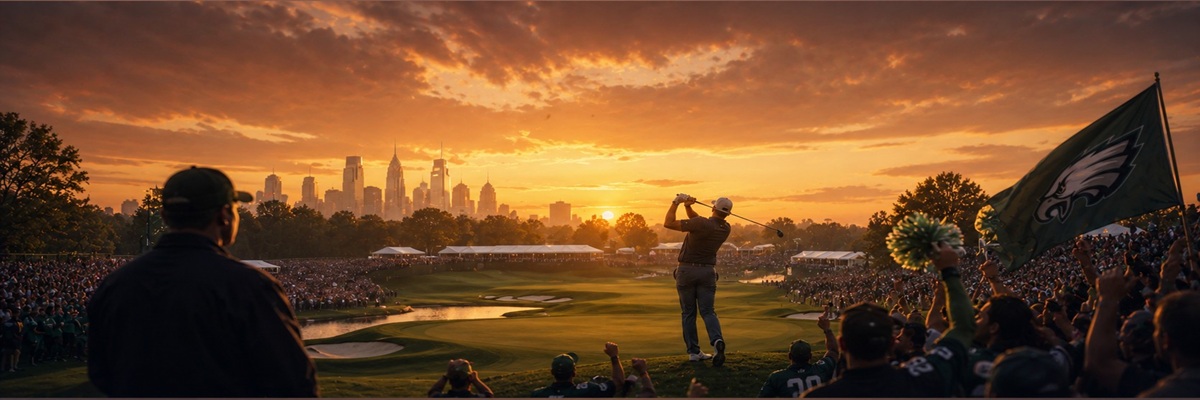
Sports fans are used to hearing dramatic announcer voices during major championship promotions. For decades, sports promo narration relied heavily on booming theatrical delivery, oversized intensity, and highly polished reads designed to make every event sound larger than life. ESPN’s recent PGA Championship promo took a noticeably different approach, and audiences immediately noticed.
Instead of using a traditional sports narrator, the network turned to Dom “Big Dom” DiSandro, the Philadelphia Eagles’ longtime security chief and one of the most recognizable personalities connected to the franchise. The spot was designed to promote the 2026 PGA Championship at Aronimink Golf Club outside Philadelphia, but it quickly gained attention well beyond golf circles.
Part of that attention came from Big Dom himself. Among Eagles fans, DiSandro has become something of a cult sports figure. He is not a player or coach, yet his visibility on the sidelines, his connection to the team’s identity, and his reputation around the organization have made him instantly recognizable throughout Philadelphia sports culture.
But the promo also resonated because it reflected a larger shift happening inside sports voiceover and broadcast narration. Modern sports promos increasingly favor authenticity, personality, and emotional familiarity over traditional “announcer voice” delivery. Big Dom’s performance worked because it sounded grounded, conversational, and connected to the city the championship was trying to represent.
The result became more than a simple golf commercial. It became a strong example of how sports promo voiceover is evolving in the streaming and social media era.
Big Dom Became the Unexpected Voice of Philadelphia’s PGA Spotlight
The PGA Championship arriving in the Philadelphia area already carried strong regional significance. Aronimink Golf Club has long been one of the most respected golf venues in the United States, and bringing a major championship back to the region generated considerable excitement among local sports fans.
ESPN leaned heavily into Philadelphia identity while promoting the event, and that decision shaped the entire tone of the campaign.
Rather than framing the tournament as a polished luxury golf experience disconnected from the city around it, the promo embraced Philadelphia’s reputation for intensity, loyalty, toughness, and sports obsession. Big Dom became the perfect figure to represent that energy.
For Eagles fans, DiSandro symbolizes a particular version of Philadelphia sports culture. He is viewed as protective, direct, loyal, and deeply connected to the team environment. Even casual NFL viewers became familiar with him after several highly publicized sideline moments during recent seasons.
That existing recognition gave the promo immediate emotional credibility.
The narration itself avoided sounding overly scripted or theatrical. Instead, it felt conversational and local, almost as if a lifelong Philadelphia sports fan was personally inviting audiences into the event. That tone helped the promo spread online because it felt different from the highly manufactured style often associated with major sports advertising.
Importantly, the spot also reached viewers who may not normally pay attention to golf promotions. Eagles fans shared it because of Big Dom. Philadelphia sports fans embraced it because it reflected the city’s identity. Golf audiences noticed it because it stood apart from more traditional championship advertising.
The timing also aligned with a successful championship week. The 2026 PGA Championship ultimately delivered a dramatic finish at Aronimink, with Aaron Rai capturing the title after a tightly contested final round. Rai became the first English golfer to win the PGA Championship in more than a century, adding another major storyline to an event that already carried substantial attention heading into the weekend.
The strong turnout and positive reception surrounding the tournament only amplified interest in the promotional campaign that helped build anticipation beforehand.
This Is Sports Promo Voiceover, Not Traditional Commercial Narration
One of the most interesting aspects of this story is how clearly it reflects the difference between commercial voiceover and promo voiceover.
Commercial narration typically focuses on selling a product or service directly. The delivery is often designed around persuasion, branding, memorability, or consumer trust.
Promo voiceover works differently.
Sports promos exist to create anticipation, atmosphere, emotional investment, and narrative tension. The narrator is not simply delivering information. They are helping shape how audiences emotionally experience an event before it happens.
That is exactly what ESPN accomplished here.
Big Dom’s voice was not polished in the traditional announcer sense, but polish was never the goal. The network wanted personality, authenticity, and regional identity. Those qualities are increasingly valuable in modern sports media because audiences today respond strongly to content that feels emotionally real.
This reflects a major shift inside sports broadcasting over the last decade.
Older sports promos often relied on highly dramatic narration styles inspired by movie trailers. Deep voices, exaggerated intensity, and cinematic phrasing dominated the genre for years. While that style still exists, many networks and streaming platforms now prefer narration that feels more documentary-driven and conversational.
Viewers increasingly connect with voices that sound human rather than performative.
That change is visible across:
- ESPN feature packages
- NFL Films storytelling
- streaming sports documentaries
- athlete-narrated promos
- behind-the-scenes sports series
- sports podcast crossover content
Modern sports audiences spend enormous amounts of time consuming personality-driven content online. Fans feel connected to athletes, coaches, insiders, and recognizable sports figures in ways that were less common in previous media eras.
Big Dom fits naturally into that environment because audiences already associate him with emotional authenticity.
Natural-Sounding Promo Narration Is Still Highly Skilled Voice Work
One misconception about personality-driven sports narration is that it somehow requires less craft than traditional announcer-style delivery.
In reality, sounding natural inside a promo environment can be extremely difficult.
Good promo narration still depends heavily on:
- pacing
- timing
- emotional rhythm
- tonal variation
- music synchronization
- narrative escalation
- audience connection
The difference is that modern sports promo work often hides the performance more carefully.
Instead of sounding like a polished announcer “performing” intensity, many contemporary promos aim to sound spontaneous and emotionally grounded. That subtlety can actually make the work more challenging because the delivery must feel authentic without becoming flat or unstructured.
Big Dom’s narration succeeded partly because it matched the visual identity of the promo itself. The campaign leaned into Philadelphia atmosphere, sports emotion, local pride, and championship anticipation. His voice complemented that environment naturally.
This is one reason celebrity and personality-based narration continues expanding throughout sports media.
Networks increasingly use:
- athletes
- coaches
- former players
- celebrities
- sports personalities
- local icons
because audiences already bring emotional associations to those voices.
The voice itself becomes part of the storytelling.
That trend does not mean professional voice actors are disappearing from sports media. Far from it. Skilled promo narrators still dominate major television campaigns, network branding packages, documentaries, and cinematic sports storytelling.
What has changed is the definition of what makes a successful sports promo voice.
Sometimes the strongest narration is no longer the most theatrical voice in the room. Sometimes it is the voice audiences already trust emotionally.
Sports Voiceover Is Moving Toward Identity-Driven Storytelling
Big Dom’s PGA Championship promo represents a larger movement happening throughout sports media and voiceover production.
Sports storytelling has become increasingly identity-driven. Fans no longer connect only with teams or championships. They connect with personalities, cities, emotional narratives, and cultural identity surrounding sports itself.
Modern promo campaigns increasingly focus on:
- regional authenticity
- emotional realism
- documentary aesthetics
- fan culture
- recognizable personalities
- conversational narration
Streaming platforms accelerated this shift significantly. Sports documentaries and behind-the-scenes series changed audience expectations about how sports stories should sound and feel. Viewers now expect intimacy and emotional access rather than constant announcer-style spectacle.
That evolution has reshaped promo voiceover alongside it.
The success of ESPN’s Big Dom spot demonstrates how effective that strategy can be when the right personality aligns with the right event and regional identity. The narration did not succeed because it sounded traditionally “perfect.” It succeeded because it felt believable.
For the voiceover industry, that distinction matters.
Promo narration is no longer defined solely by vocal power or theatrical delivery. Increasingly, it is about emotional credibility, storytelling atmosphere, and audience familiarity.
Big Dom may not be a traditional voice actor, but this campaign still worked as a strong example of sports promo voiceover in action. The performance created anticipation, reinforced branding, strengthened emotional connection, and gave the championship a recognizable identity tied directly to Philadelphia sports culture.
In today’s sports media landscape, that kind of authenticity can be more powerful than the biggest announcer voice in the world.
