
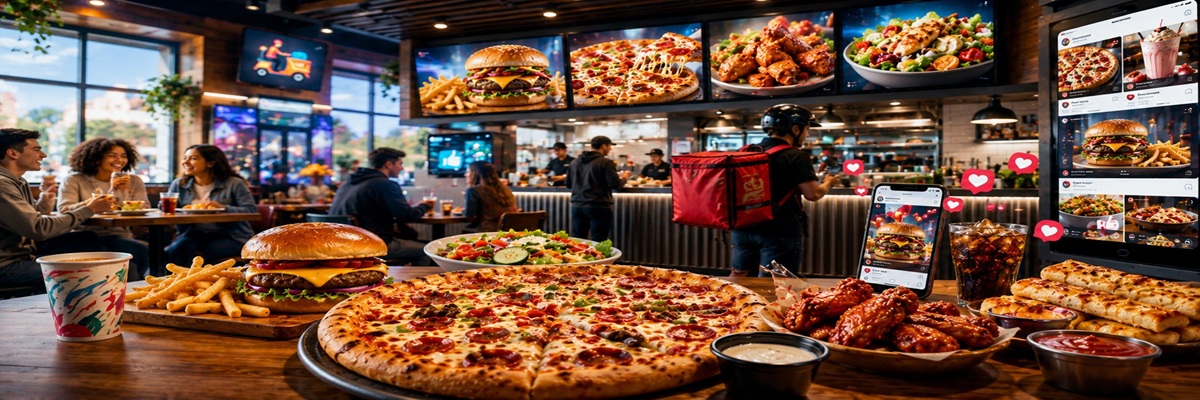
For decades, fast-food and pizza-chain advertising relied on loud announcer voices, aggressive pacing, rapid-fire promotions, and oversized enthusiasm designed to grab attention instantly during television commercial breaks. The formula worked for years because audiences expected ads to sound energetic, theatrical, and highly performative.
Today, most restaurant advertising sounds completely different. Modern food & beverage commercials often use softer narration, conversational delivery, understated humor, documentary-style realism, and emotionally relaxed performances that feel more natural to audiences raised on streaming platforms, podcasts, YouTube creators, and social media personalities.
Few restaurant brands demonstrate this transition more clearly than Domino’s. Across multiple advertising eras, Domino’s evolved from traditional hard-sell commercial narration into one of the strongest examples of realism-driven food advertising. The company’s famous “Pizza Turnaround” campaign fundamentally changed how many restaurant commercials approached voiceover and audience trust. In the years that followed, much of the fast-food industry quietly adopted similar narration strategies.
The evolution of Domino’s advertising reveals something much larger about commercial voiceover itself. Restaurant commercials no longer succeed simply because the announcer sounds exciting. Increasingly, they succeed because the voice sounds believable.
Early Restaurant Commercials Relied on Aggressive Sales Narration
During the 1980s and 1990s, restaurant commercials followed a highly recognizable advertising structure. Fast pacing, loud announcer energy, dramatic emphasis, and promotion-heavy copy dominated the food industry. Pizza chains, burger restaurants, fried chicken brands, and sandwich companies all competed aggressively for attention during crowded television ad breaks. Commercial voice actors were often directed to sound bigger, faster, and more energetic than natural speech would normally allow.
Domino’s heavily embraced that style during its earlier advertising years, particularly during the famous “30 minutes or less” era. Commercials focused intensely on speed, convenience, pricing, and urgency. Narration was designed to create excitement immediately, often delivering menu descriptions rapidly while matching fast editing and upbeat music.
The vocal style itself reflected broader announcer traditions that shaped television advertising throughout the era. Many restaurant commercials borrowed pacing and vocal projection techniques inspired by classic radio announcers and television promo narration. The influence of legendary voices like Don LaFontaine and Ernie Anderson extended far beyond movie trailers. Their dramatic cadence and commanding vocal authority shaped the rhythm of commercial advertising across multiple industries, including food campaigns.
Restaurant voiceover during that period often sounded intentionally larger than life. Announcers emphasized extra cheese, limited-time deals, delivery speed, family meal packages, and party promotions with sharp rhythmic precision designed to dominate viewer attention. The performance style prioritized excitement over realism.
This approach made sense within the television landscape of the time. Audiences were accustomed to traditional commercial structures, and louder advertising often translated into stronger brand recall. Food commercials functioned almost like miniature variety shows, combining announcer performance, exaggerated reactions, fast cuts, and highly stylized food imagery.
Domino’s commercials from that era reflected those expectations perfectly. The company’s advertising frequently leaned into speed, convenience, affordability, energetic family gatherings, sports-night atmosphere, and delivery urgency. The narration itself was never subtle. Yet as media habits slowly changed during the 2000s, audiences began responding differently to highly polished commercial performance. Viewers increasingly distrusted advertising that sounded overly rehearsed or aggressively sales-oriented. That shift created one of the most important turning points in modern restaurant advertising.
The “Pizza Turnaround” Campaign Changed Food & Beverage Commercials
Domino’s advertising transformation became famous largely because the company did something extremely unusual. It admitted people did not like the pizza. The “Pizza Turnaround” campaign launched in 2009 and quickly became one of the most discussed restaurant rebranding efforts in modern advertising history. Rather than pretending customer criticism did not exist, Domino’s openly acknowledged negative reviews and publicly committed to improving the product.
That honesty dramatically changed the tone of the commercials. Instead of using loud announcer reads and polished promotional language, the campaign leaned heavily into documentary-style realism. Commercials featured customer complaints, employee reactions, kitchen footage, conversational interviews, understated narration, and natural speech patterns. The advertising intentionally abandoned many traditional fast-food commercial techniques.
This shift extended directly into voiceover. The narration became calmer, more restrained, and more emotionally grounded. The pacing slowed noticeably. Dialogue sounded imperfect on purpose. Real employees and executives appeared throughout the campaign, including former Domino’s CEO Patrick Doyle, whose presence reinforced the company’s attempt at transparency.
That authenticity mattered enormously. Audiences suddenly felt like they were hearing actual people rather than commercial characters performing exaggerated enthusiasm. The campaign replaced salesmanship with vulnerability, which was almost unheard of in major restaurant advertising at the time.
From a voiceover perspective, the change was massive. Traditional restaurant narration often depended on projection, speed, theatrical confidence, and scripted rhythm. The “Pizza Turnaround” commercials instead relied on conversational pacing, emotional honesty, understated delivery, realistic pauses, and documentary realism.
The narration no longer sounded like a commercial trying to sell pizza aggressively. It sounded like people trying to rebuild trust. That distinction fundamentally reshaped audience expectations. The campaign succeeded commercially and critically because viewers believed the tone. The softer narration style felt emotionally credible in a way traditional hard-sell food commercials increasingly did not. After Domino’s proved this approach could work, much of the restaurant industry slowly began shifting in similar directions.
Modern Restaurant Commercials Use Personality More Than Announcer Energy
Following the success of Domino’s realism-focused advertising, restaurant commercials across the industry gradually evolved toward more personality-driven narration. Modern Domino’s campaigns rarely sound like traditional announcer commercials anymore. Instead, many focus on convenience, humor, casual social situations, app ordering, delivery tracking, gaming culture, sports viewing, and late-night cravings. The voiceover style evolved alongside those themes.
Rather than using one dominant announcer voice controlling the commercial, many campaigns now rely on ensemble dialogue, conversational interaction, or understated narration that blends naturally into the scene. This shift reflects broader media changes happening everywhere outside advertising. Modern audiences consume massive amounts of conversational content daily through podcasts, livestreams, TikTok creators, YouTube personalities, and documentary-style streaming content. Highly theatrical announcer reads increasingly feel disconnected from how people actually communicate online.
Domino’s adapted to that reality earlier than many competitors. The company’s commercials gradually became more casual, more self-aware, less polished, more personality-driven, and more socially relatable. Even the pacing changed. Earlier commercials tried to maximize information delivery quickly. Modern campaigns often leave space for visual storytelling, reaction shots, awkward humor, or food close-ups without constant narration overwhelming the audience.
This style also changed the kinds of voice actors and performers used in restaurant advertising. Instead of relying exclusively on anonymous commercial announcers, many modern campaigns feature conversational narrators, relatable customer voices, employees, influencers, celebrities, and sports personalities. The voice itself becomes part of the emotional branding.
This trend extends well beyond Domino’s. Pizza Hut increasingly embraced nostalgia-driven comfort narration and celebrity crossover campaigns. Wendy’s built an entire advertising identity around dry humor and sarcastic conversational pacing. Taco Bell shifted toward youth-culture lifestyle narration with calmer, trendier delivery styles. The entire food commercial industry moved toward realism and emotional familiarity. Domino’s simply became one of the clearest examples of that transformation happening in real time.
Conversational Voiceover Changed the Psychology of Food Advertising
The reason conversational narration works so effectively in modern food commercials comes down largely to psychology. Traditional hard-sell announcer reads were designed to command attention aggressively. Modern restaurant advertising often aims for something different. Brands increasingly focus on emotional comfort, craving association, trust, familiarity, and social realism rather than simply overwhelming audiences with energy. Modern viewers now spend much of their time in media environments where natural speech dominates. Podcasts, influencer videos, livestreams, and streaming documentaries all trained audiences to respond more positively to voices that feel emotionally genuine rather than overtly commercial.
Food advertising adapted accordingly. Modern restaurant commercials increasingly use vocal techniques designed to sound effortless. Voice actors often rely on relaxed pacing, understated enthusiasm, conversational emphasis, natural pauses, and a subtle smile-through-the-voice quality that makes the delivery feel warmer and more believable. Rather than overwhelming audiences with high-energy salesmanship, many modern reads aim to sound like real people casually talking about food they genuinely enjoy.
Ironically, these performances are often extremely controlled. Good food commercial voiceover still requires highly specialized timing because narration must synchronize carefully with food visuals, editing rhythm, close-up shots, sound design, music transitions, and emotional pacing. Even a small pause before describing a menu item can influence how craveable the food appears emotionally.
Modern voice actors working in restaurant advertising frequently underplay enthusiasm intentionally because audiences now associate exaggerated delivery with traditional advertising manipulation. Softer narration tends to feel more trustworthy and emotionally natural. This does not mean modern food commercials lack strategy. In many ways, the psychology became more sophisticated.
Restaurant advertising now depends heavily on subtle emotional association. Warm voices help create comfort. Conversational pacing creates trust. Awkward humor can make a brand feel more relatable. Documentary-style realism creates authenticity, while celebrity familiarity strengthens emotional connection with audiences. The narration is still selling the product aggressively. It simply sounds far less aggressive while doing it.
Streaming and Social Media Permanently Changed Commercial Voiceover
Another major reason restaurant advertising changed so dramatically is the collapse of the traditional television-commercial environment. Older restaurant ads were designed primarily for broadcast television audiences sitting through fixed commercial breaks. Modern food advertising now exists across YouTube pre-roll, TikTok clips, streaming services, sports broadcasts, Instagram ads, mobile apps, and social media feeds.
That completely altered how commercials sound. Viewers scrolling through social content react differently to narration than audiences watching scheduled television decades ago. Loud announcer reads can now feel outdated or artificially corporate in digital environments. Conversational narration blends more naturally into modern media consumption habits. Restaurant commercials also became shorter and faster. Many modern campaigns now rely on six-second ads, fifteen-second social clips, looping food visuals, meme pacing, and influencer crossover content. Voice actors working in food advertising had to adapt rapidly to those formats.
This is one reason modern commercial narration often feels less “performed” even though the technique behind it remains highly skilled. The performance is designed to disappear into the viewing experience rather than dominate it. Domino’s commercials evolved alongside those changes successfully because the brand embraced realism earlier than many competitors.
Modern Restaurant Commercials Depend on Believability More Than Volume
Restaurant advertising still remains one of the most voiceover-dependent commercial genres in the industry. Food commercials rely heavily on narration to create appetite, comfort, emotional familiarity, and brand identity. The voice often determines whether the ad feels craveable, comforting, funny, trustworthy, nostalgic, modern, or premium.
Domino’s evolution demonstrates how dramatically those emotional goals changed over time. Earlier campaigns prioritized volume, urgency, and theatrical excitement. Modern campaigns focus far more on relatability, realism, and conversational connection. The company’s advertising transformation mirrored larger changes happening across media culture itself.
Today, the most successful restaurant commercials often sound less like commercials than ever before. That shift fundamentally changed food commercial voiceover. The strongest narration in modern restaurant advertising is no longer necessarily the loudest or most dramatic voice in the room. Increasingly, it is the voice audiences instinctively believe sounds real.
