
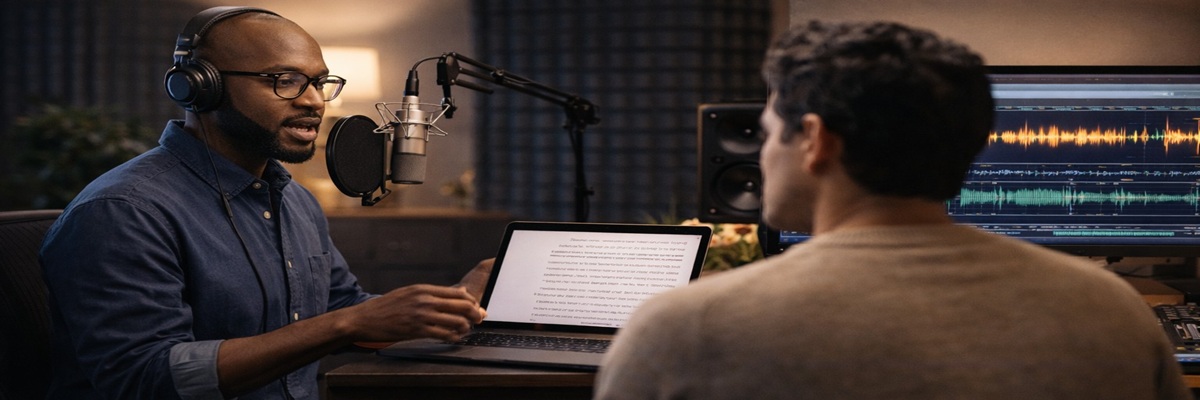
Audiobook casting has shifted in a noticeable way over the past few years. Traditional demo reels still exist, but they are no longer the primary tool used to evaluate narrators. Producers and casting teams are placing more weight on samples built from real text.
This change reflects the nature of audiobook performance itself. Narration is long-form, structured, and tied closely to the material. A polished demo can showcase vocal ability, but it does not always show how a narrator handles pacing, storytelling, and consistency across a scene.
Samples fill that gap. They allow producers to hear how a voice works within the context of a book rather than in isolation.
The Shift Toward Real Text in Audiobook Casting
Casting decisions in audiobooks are increasingly based on how well a narrator interprets actual material. This has led to a preference for samples that use real text instead of curated demo clips.
Producers are not only listening for voice quality. They are evaluating how a narrator approaches structure, transitions, and tone. A sample built from a book excerpt provides that information in a direct and practical way.
This approach also reflects how audiobook projects are produced. Narrators are expected to carry a consistent tone across extended passages, not just deliver short, varied performances. Samples that mirror this structure give casting teams a clearer understanding of what to expect.
Platforms used for audiobook auditions have reinforced this shift. Many casting systems now require narrators to submit reads based on provided text, making samples an integral part of the selection process.
Elements That Define a Strong Audiobook Sample
A strong audiobook sample is focused and controlled. It is not designed to showcase a wide range of styles, but to demonstrate how a narrator handles a specific piece of material.
Most effective samples are built around a single excerpt. This allows the narrator to establish a clear tone and maintain it throughout the read. Including both narration and light dialogue helps show how transitions are managed without overcomplicating the performance.
Pacing is one of the most important elements. The sample should move at a natural speed that allows the listener to follow the text comfortably. Rushed delivery can reduce clarity, while overly slow pacing can disrupt the flow.
Clarity and articulation also play a central role. Every word needs to be easy to understand, particularly when the material includes descriptive passages or technical language.
Character work, when present, should be subtle. The goal is to differentiate voices without drawing attention away from the narrative. Overly distinct or exaggerated character choices can make the sample feel disconnected from the tone of the book.
A well-constructed sample presents the narrator as someone who can sustain a performance, not just deliver isolated moments.
Genre Alignment and Sample Selection
Audiobook casting is closely tied to genre. A voice that works well for one type of material may not suit another, even if the performance itself is strong.
Fiction and nonfiction require different approaches. Fiction often includes character interaction, shifts in tone, and narrative pacing that supports storytelling. Nonfiction tends to focus on clarity, structure, and authority, particularly in subjects like business or self-development.
Within fiction, there are further variations. Romance may call for a warmer, more intimate tone. Thrillers often rely on controlled pacing and tension. Literary works may require a more measured, reflective delivery.
Because of these differences, samples need to be aligned with the type of work a narrator is pursuing. A general-purpose recording is less effective than one that reflects a specific genre.
Producers listen for this alignment early in the process. A sample that fits the material reduces uncertainty and increases the likelihood of being considered for a project.
How Samples Function Within Casting Decisions
Samples are often the first point of evaluation in audiobook casting. They help producers narrow down a large pool of narrators to a smaller group that fits the project.
In many cases, the sample alone determines whether a narrator moves forward. It provides enough information to assess tone, pacing, and overall suitability without requiring additional material.
For some projects, especially those handled through structured platforms or direct submissions, the sample may also play a role in final selection. When a narrator’s style closely matches the material, producers may rely on that performance as a basis for casting.
This makes the sample a central part of the process rather than a supporting element. It is not just an introduction, but a working example of how the narrator will approach the book.
The importance of this step has grown as audiobook production has expanded. With more content being produced, casting decisions need to be efficient while still maintaining quality. Samples allow producers to make those decisions with confidence.
Common Issues That Reduce Sample Effectiveness
While samples are essential, certain mistakes can limit their impact.
One of the most common issues is trying to include too many styles in a single recording. This can make the sample feel unfocused and reduce its effectiveness as a representation of a specific type of work.
Overperformance is another problem. Adding excessive emotion or exaggerated character voices can pull the listener away from the text. Audiobook narration benefits from a more controlled approach.
Pacing issues also affect how a sample is received. Moving too quickly can make the material difficult to follow, while inconsistent pacing can disrupt the rhythm of the narration.
Choice of material matters as well. Using text that does not reflect the type of work a narrator is seeking can create a mismatch. A strong performance may still feel out of place if it does not align with the intended genre.
Technical quality should not be overlooked. Clear audio, proper levels, and a clean recording environment are expected, even at the sample stage. For narrators working remotely, access to a professional home studio can help provide the consistent recording quality producers expect when reviewing auditions and samples.
Addressing these issues can significantly improve how a narrator is perceived during casting.
Audiobook samples have become a central part of how narrators are evaluated. They provide a direct view into how a voice interacts with the text, offering more insight than traditional demos alone.
As casting continues to rely on real performance rather than general presentation, the role of samples is likely to remain central. For narrators, this means focusing on relevance, clarity, and alignment with the material they want to work on.
A strong sample does more than showcase a voice. It demonstrates the ability to carry a story in a way that fits the expectations of modern audiobook production.
