
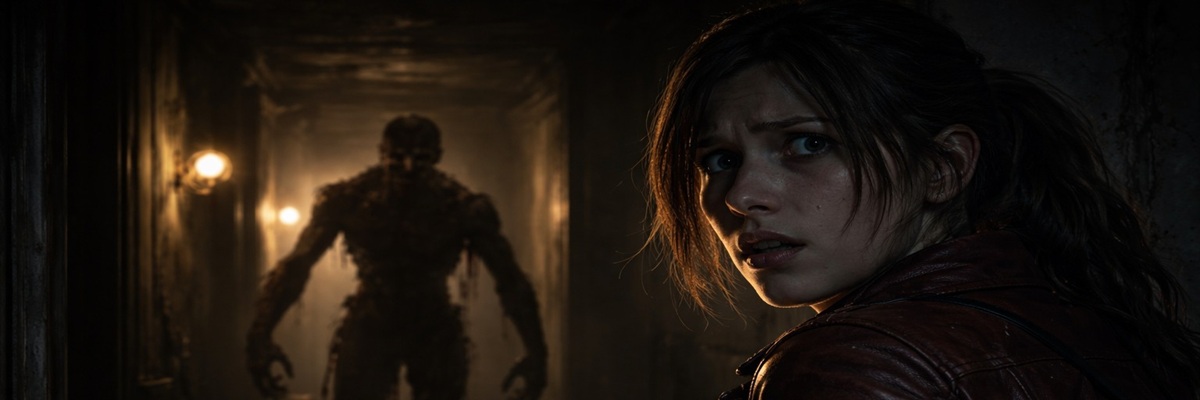
The Resident Evil series has always relied on atmosphere as much as action, and Resident Evil Requiem looks set to continue that tradition with a stronger focus on psychological horror. Early details surrounding the game have already drawn attention, not just for its tone and new characters, but for the unsettling presence of a mysterious stalker tied to a character named Grace.
What makes this particular enemy stand out is not just its design or behavior, but the voice behind it. In a surprising twist, the actor responsible for the creature’s sounds used an unusual approach during recording sessions, one that involved drinking large amounts of milk to achieve a disturbing vocal effect. It is the kind of behind-the-scenes detail that feels almost absurd at first, yet it says a lot about how far performers will go to create something memorable.
The Character and Its Role in the Game
At the center of this discussion is a terrifying stalker enemy known as “The Girl,” a figure that relentlessly pursues Grace throughout Resident Evil Requiem. While full story details are still emerging, this character appears to follow in the lineage of iconic franchise threats such as Mr. X and Lady Dimitrescu, enemies designed to create constant pressure rather than straightforward combat encounters.
The Girl’s role is built around unpredictability. Instead of appearing only in scripted moments, she creates tension through presence, forcing players to stay alert at all times. This kind of design depends heavily on sound. Footsteps, breathing, and unsettling vocalizations all contribute to how players perceive danger before they even see it.
What sets this character apart is how human the voice feels, even when it becomes distorted. That balance makes the threat feel closer and more personal. It is not just a monster in the distance, it sounds like something that should not exist, yet does.
How the Voice Was Created
The process behind The Girl’s voice is easily one of the most talked-about details so far. During recording, actress Delanie Nicole Gill experimented with ways to make her voice sound strained, unnatural, and deeply unsettling.
One of the more unexpected choices involved drinking a significant amount of milk before and during sessions. It was not part of some industry standard or widely used method. It was simply a creative decision that ended up working in a very specific way. The milk affected her throat and vocal texture, producing a thicker, heavier sound that carried an uncomfortable, almost suffocating quality.
It also made the recording process more physically demanding. Maintaining that kind of distorted vocal delivery required effort and control, especially over extended sessions. The result is a performance that feels raw and slightly unstable, which works perfectly for horror.
There is something oddly fitting about it. Horror often comes from taking something familiar and making it feel wrong. In this case, even the process behind the voice carries that same energy. Drinking two jugs of milk to sound more terrifying is not something you expect to hear, yet it clearly helped create a voice that stands out.
Delanie Nicole Gill brings The Girl to life, delivering a performance that already stands out even before the game’s release. While this role is gaining attention for its unusual recording process, it is also part of a broader acting career that spans different types of performance work.
Gill has built her career across film, television, and voice roles, steadily developing a range that allows her to move between grounded characters and more stylized performances. Like many actors, she began with smaller roles, gradually gaining experience and visibility through consistent work.
Her transition into voice acting highlights a different set of skills. Without the support of physical expression on screen, everything depends on sound. That includes tone, pacing, breath, and subtle shifts in delivery. It is a discipline that often goes unnoticed by general audiences, yet it plays a major role in shaping how characters are perceived.
In Resident Evil Requiem, Gill steps into something far removed from conventional roles. Instead of portraying a clearly defined personality, she is creating a presence. The performance relies less on dialogue and more on sound, which makes the role both challenging and unique within her body of work.
Resident Evil Requiem and Its Direction
Resident Evil Requiem appears to be leaning further into psychological horror, building on elements that have defined the series while introducing new ideas. With Grace positioned as a central character, the game seems to focus more on personal tension and vulnerability.
The series has gradually shifted toward combining survival mechanics with immersive storytelling, and this installment continues that direction. Environments, lighting, and pacing are all expected to work together to create a constant sense of unease.
Audio plays a major role in that design. Every sound, whether it is distant movement or a sudden vocal burst, contributes to how players experience fear. The inclusion of a character like The Girl reinforces that focus, as her presence is tied as much to what players hear as what they see.
This approach moves away from relying only on sudden scares and instead builds tension over time. It is a slower, more deliberate style of horror that depends heavily on performance.
Voice Acting and Horror Game Design
In horror games, sound often carries more impact than visuals. Players can look away from the screen, but they cannot avoid what they hear. A well-crafted voice can signal danger long before anything appears, creating anticipation that builds into genuine fear.
Video game voiceover performances play a critical role in shaping that experience, particularly in psychological horror where breathing, pacing, vocal strain, and emotional unpredictability often become part of the gameplay itself. Subtle details such as breathing patterns, vocal strain, and irregular delivery can completely change how a moment feels. These elements turn a simple encounter into something memorable.
Performances like Gill’s show how much creativity can go into that process. Instead of relying entirely on post-production effects, actors are contributing directly to the texture of the sound. This results in something that feels more organic and less predictable.
As game development continues to evolve, voice acting is becoming more visible as a central part of the experience. It is no longer just supporting the story. It is helping define it.
A Performance That Pushes Horror Further
The work behind Resident Evil Requiem’s stalker enemy shows just how far actors are willing to go to create something that leaves an impression. From experimenting with vocal delivery to making unexpected choices in the recording booth, the process itself becomes part of the story.
Delanie Nicole Gill’s performance stands out not just because of how it sounds, but because of how it was created. It brings a sense of unpredictability that fits perfectly within the game’s direction.
As more details about Resident Evil Requiem continue to emerge, this role is already shaping expectations. It points toward a game that is willing to take risks, both in how it tells its story and in how it brings its characters to life.
