
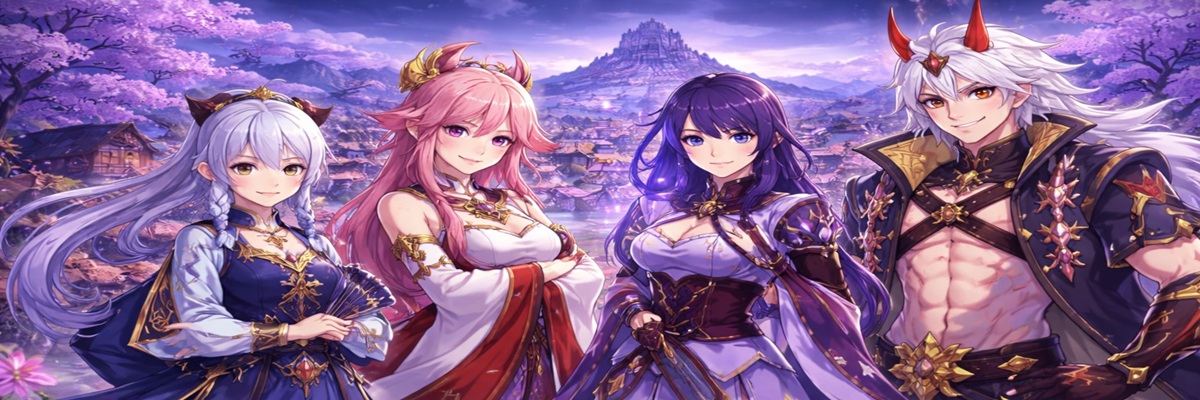
By the time Genshin Impact introduced its third major region in mid-2021, the game had already transformed from a surprise global hit into one of the most watched live-service titles on streaming platforms. Nearly a year after launch, the arrival of Inazuma marked not just a new chapter in the story, but a test of the game’s staying power. Streaming culture and voice acting both played crucial roles in that transition.
While earlier regions established the game’s tone and global voice talent model, Inazuma arrived at a moment when the question was no longer whether Genshin Impact could go viral, but whether it could remain culturally relevant.
Streaming Momentum From Launch to Year One
When Genshin Impact launched in September 2020, it generated massive attention across Twitch and YouTube. The game’s open-world structure combined with its gacha mechanics created ideal streaming conditions. Viewers tuned in for exploration reactions, story moments, and especially for live “wish pulls,” where players attempted to obtain rare five-star characters in real time.
Banner releases became streaming events. Limited-time characters drove repeat viewership because the suspense of gacha pulls translated perfectly to live reactions. Streamers built recurring content around update cycles, turning character announcements into appointment viewing.
However, as with many major launches, the initial spike naturally stabilized. Other high-profile releases entered the market during the following year. Competing live-service games and major single-player titles pulled portions of the audience away. The explosive numbers seen in late 2020 were difficult to sustain.
Yet Genshin Impact did not collapse in viewership. Instead, it settled into a pattern common to successful live-service games: periodic surges tied to major updates. Each character reveal, region teaser, or limited event brought spikes. The audience shifted from constant peak attention to cyclical engagement.
By the time Inazuma arrived in July 2021, streaming had stabilized rather than faded. The game no longer relied on novelty. It relied on anticipation.
Inazuma’s Narrative Shift and Tonal Maturity
Inazuma introduced a dramatic tonal change. Inspired by Japan, the region embraced themes of isolation, authority, and civil conflict. The Electro Archon’s rule defined a storyline centered on control and resistance, contrasting sharply with earlier themes of freedom and contracts.
The atmosphere was darker. Political tension replaced introductory adventure. Story arcs dealt with loss, identity, and rebellion. This narrative maturity required a shift in vocal delivery.
Where earlier performances leaned into warmth or measured authority, Inazuma demanded intensity and emotional weight. The region’s conflicts were not abstract. They were personal and ideological. Voice acting followed that change.
Voice Acting Evolution in the Inazuma Era
The five-star characters introduced in this chapter reflected a stronger dramatic direction. Performances emphasized resolve, volatility, and inner conflict.
Raiden Shogun’s portrayal carried controlled severity. Kamisato Ayaka balanced elegance with suppressed emotion. Yoimiya provided brightness, but even her optimism felt grounded in the region’s tension. Kaedehara Kazuha brought reflective calm shaped by exile and loss. Yae Miko added calculated wit layered over spiritual authority.
The tonal shift is evident not only in dialogue but also in battle lines. Delivery became firmer and more deliberate. Emotional climaxes carried greater intensity than earlier arcs.
Five-Star Character Voice Cast
Raiden Shogun
- English: Anne Yatco
- Japanese: Miyuki Sawashiro
- Chinese: Ju Huahua
Kamisato Ayaka
- English: Erica Mendez
- Japanese: Saori Hayami
- Chinese: Xiaotian
Kamisato Ayato
- English: Chris Hackney
- Japanese: Akira Ishida
- Chinese: Zhao Lu
Yoimiya
- English: Jenny Yokobori
- Japanese: Kana Ueda
- Chinese: Jin Na
Kaedehara Kazuha
- English: Mark Whitten
- Japanese: Nobunaga Shimazaki
- Chinese: Banma
Yae Miko
- English: Ratana
- Japanese: Ayane Sakura
- Chinese: Duoduo
Supporting characters reinforced the cultural and emotional texture of the region. Kujou Sara’s disciplined tone emphasized loyalty and internal conflict. Thoma provided warmth without disrupting the region’s gravity. Gorou added earnestness shaped by leadership responsibility. Sayu injected lighter energy, but within controlled boundaries.
Unlike earlier chapters, the Japanese voice track felt especially aligned with the region’s inspiration, though the English and Chinese performances maintained strong localization integrity. The result was a cohesive yet culturally distinct voice identity.
Supporting Character Voice Cast
Kujou Sara
- English: Jeannie Tirado
- Japanese: Asami Seto
- Chinese: Zhang Qi
Thoma
- English: Christian Banas
- Japanese: Masakazu Morita
- Chinese: Wang Xiaobing
Gorou
- English: Cory Yee
- Japanese: Tasuku Hatanaka
- Chinese: Liu Yilei
Sayu
- English: Lily Ki
- Japanese: Aya Suzaki
- Chinese: Du Mingya
Streaming During the Inazuma Release
When Inazuma was officially revealed, streaming activity surged again. Trailer reactions dominated gaming categories. Archon banner releases generated large live audiences. Story playthroughs returned to the forefront of streaming feeds.
While the viewership did not replicate the unprecedented launch spike of 2020, it demonstrated durability. The game had transitioned from viral phenomenon to dependable live-service staple.
Importantly, streaming patterns revealed that character-driven content remained the primary draw. Pull sessions for Raiden Shogun and other five-star units consistently generated spikes. Reaction videos to cinematic cutscenes circulated widely.
Competing games did draw portions of the audience away at various points. Yet the cyclical update model allowed Genshin Impact to reclaim attention during major releases. Inazuma proved that the game’s relevance was not dependent on launch novelty alone.
From Viral Hit to Established Platform
Inazuma marked a turning point. The game matured narratively and vocally, while its streaming presence shifted from explosive growth to sustained relevance.
Voice acting became more cinematic and emotionally charged. Story arcs deepened. Streaming stabilized into predictable cycles driven by anticipation rather than curiosity.
The region demonstrated that Genshin Impact was not simply a launch-era trend. It had become a long-term live-service ecosystem supported by performance, storytelling, and a community that returned for every major update.
Inazuma did not just expand the map. It confirmed the game’s evolution from breakout sensation to established cultural presence.
