
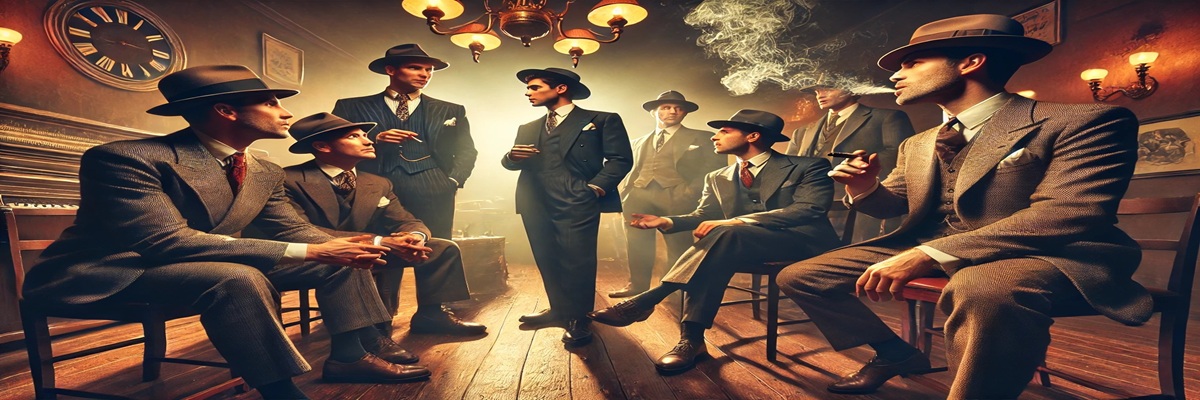
A New Chapter in the Mafia Legacy
Mafia: The Old Country transports players to a richly detailed setting steeped in atmosphere, intrigue, and the grit of organized crime. This latest entry expands the franchise’s reputation for narrative-driven gameplay, pairing cinematic visuals with a voice cast carefully chosen to embody the period’s tension and layered personalities. Every line is delivered with the weight of the story’s stakes, helping the world feel authentic and alive.
Set against a backdrop of power struggles and shifting loyalties, the game demands performances that balance menace, charm, and vulnerability. The cast delivers not just dialogue, but a sense of history, placing the player firmly in the middle of a world where every choice has consequences.
Full Voice Cast
The talent roster for Mafia: The Old Country is extensive, combining seasoned performers with fresh voices. Each actor brings distinctive qualities to their role, shaping the characters in ways that elevate both the story and the gameplay experience.
- Matteo Rossi as Enzo Vitale
- Luca Ferraro as Carlo Mancini
- Gianni Costa as Rocco Bellini
- Alessio Romano as Salvatore Greco
- Elena Marchetti as Isabella Conti
- Sofia De Luca as Rosa Vitale
- Vittorio Bianchi as Don Arturo Marino
- Marco Santoro as Franco Lombardi
- Daniela Ricci as Giovanna Russo
- Paolo Gallo as Father Angelo Ferri
This ensemble works in harmony to create a soundscape that is as immersive as the city streets, smoky backrooms, and tense negotiations that define the game.
Crafting Voices for an Authentic World
The game’s developers and voice directors took a meticulous approach to casting, seeking performers whose voices carried both the authenticity of the era and the flexibility needed for dynamic, branching dialogue. For characters like Enzo Vitale, whose arc moves from loyal soldier to conflicted decision-maker, the delivery needed to evolve alongside the narrative. Similarly, Isabella Conti’s role demanded a mix of resilience and emotional depth, something captured through careful performance choices.
In-game conversations are delivered with a cinematic pacing, allowing the actors to lean into pauses, tension, and tonal shifts. This performance style ensures that interactions feel natural rather than scripted, pulling players deeper into the story.
Behind the Scenes: Building the Performances
Bringing Mafia: The Old Country to life required more than simply hiring skilled actors—it was a collaborative effort between performers, voice directors, and the narrative team. Before recording began, the cast was given detailed character briefs, historical references, and scene context to help them fully inhabit their roles. In many cases, actors worked through rehearsals to refine accents, speech rhythms, and emotional beats that matched the game’s time period and setting.
Dialogue sessions often took place with multiple actors recording together, a choice that allowed for more organic exchanges. This approach created subtle overlaps, pauses, and spontaneous energy that are difficult to achieve in isolated recordings. The result is a sound that feels authentic to the fast-paced, unpredictable world of organized crime, where conversations can turn from casual to confrontational in a heartbeat.
The Role of Voice Direction
Voice directors played a central role in ensuring the performances matched the tone of the story. They guided the pacing of delivery, helped actors hit emotional targets, and made sure each line fit the mood of the scene. In a narrative as layered as Mafia: The Old Country, this meant balancing moments of high tension with quieter, more intimate exchanges.
This careful modulation is especially noticeable in the game’s branching dialogue. Players may choose to navigate a situation with charm, intimidation, or diplomacy, and the cast had to record variations that felt equally believable. That flexibility in performance allows the player to shape their character’s personality without breaking immersion.
Elevating Gameplay Through Voice
Strong voice performances in Mafia: The Old Country do more than serve the narrative—they actively influence the gameplay experience. When a tense standoff is underscored by a convincing threat, or a heartfelt moment is delivered with genuine vulnerability, the player becomes more invested in their decisions.
Even smaller roles benefit from this attention to detail. Minor characters, whether they appear for a single scene or recur in side missions, are voiced with distinct personalities. This gives the world a lived-in quality, where even background conversations contribute to the atmosphere. It’s an approach that turns the game’s city into more than a backdrop—it becomes a character in its own right, shaped by the people who inhabit it.
Preserving the Series’ Legacy
Mafia: The Old Country doesn’t just tell a new story—it carries forward the legacy of a franchise known for its immersive, character-driven narratives. The voice cast plays a pivotal role in this, ensuring that every conversation, confrontation, and confession feels true to the spirit of the series. Returning fans will recognize the same commitment to authenticity that made earlier entries memorable, while newcomers will be drawn in by the richness of the performances.
Standing Apart in the Genre
In an era where many narrative-driven games lean heavily on cinematic visuals, Mafia: The Old Country stands out by giving equal weight to the audio experience. The nuanced delivery of its cast adds layers to the story that visuals alone cannot provide. Dialogue becomes more than exposition—it becomes a tool for worldbuilding, mood-setting, and player engagement.
This balance of strong writing, careful direction, and skilled voice acting positions the game as a standout in the crowded landscape of story-based titles. It shows that when performances are treated as a core pillar of the design, the result is an experience that resonates long after the final scene fades to black.
