
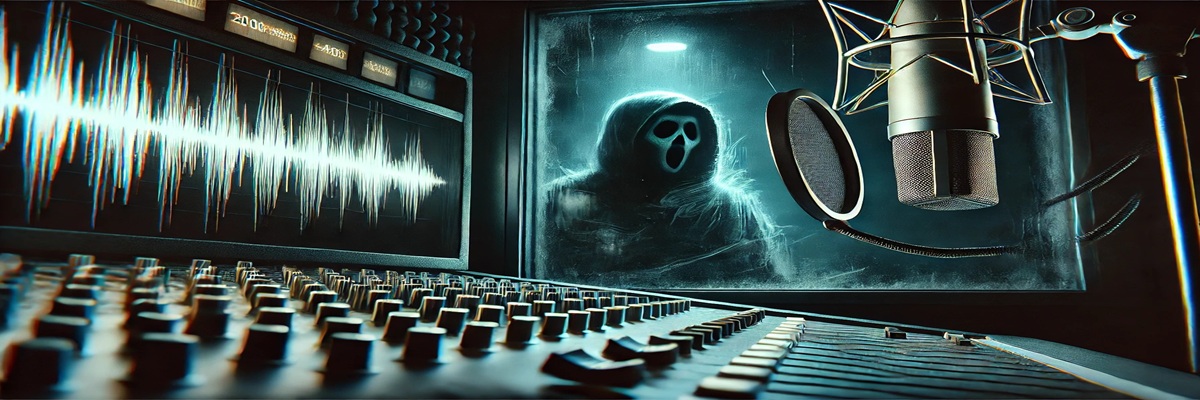
Few horror villains have a voice as instantly recognizable as Ghostface, and now that sinister presence is making its way into a brand new format. Roger L. Jackson, the man behind the mask, will reprise his role in the upcoming audiobook adaptation of Scream: A Novel, marking the first time Ghostface haunts listeners through a fully immersive audio experience.
Jackson’s performance has been a defining feature of the Scream franchise since the original 1996 film. His chilling delivery, equal parts playful and menacing, helped set the tone for what would become one of the most iconic horror series in film history. With his return for the audiobook, fans are getting something unique: the chance to experience Ghostface without the visual, just the voice, directly in their ears.
A Franchise Expands Into Audio
The audiobook, penned by Scream franchise veteran R.J. Torbert, is more than just a retelling. It’s a new exploration of the Scream mythos in a format that’s gaining popularity among horror fans who appreciate psychological tension built through sound and silence. The adaptation is being produced as a high-quality audio drama rather than a simple narration, and Jackson’s return adds a layer of authenticity that ties it directly to the films.
What makes this move particularly exciting is the rarity of a horror icon crossing over so directly into audiobooks with their original voice actor. While many tie-in stories often recast or rely on generic narrators, this project is keeping its roots intact, making it feel like a canonical addition to the Scream universe.
Roger L. Jackson’s Enduring Influence
Jackson’s voice has become inseparable from the Ghostface persona. Whether he’s delivering one of the franchise’s many twisted phone calls or taunting victims with unnerving calmness, his vocal work has elevated the role beyond the typical masked killer. His inclusion in the audiobook gives the project instant credibility, and for longtime fans, it’s a major selling point.
Unlike other horror icons who are defined visually, Jason’s hockey mask or Freddy’s bladed glove, Ghostface’s terror comes largely from what he says and how he says it. That makes the audiobook format a perfect match. With no visual component, the voice becomes even more critical, allowing Jackson’s performance to drive the experience in full.
Building Tension Through Sound
In many ways, Scream: A Novel is tailor-made for the audiobook format. The franchise has always leaned heavily on the mechanics of suspense, creaking doors, whispered threats, and, of course, the voice on the other end of the phone. Stripped of visuals, the audiobook emphasizes these sonic elements even more, placing listeners directly in the psychological crosshairs.
Jackson’s seasoned control over vocal cadence, breath, and tonal shift brings a refined intensity to the role that’s rarely experienced in audiobooks. For fans who grew up jumping at the sound of Ghostface’s drawl, this new format will feel like a personalized horror encounter. Headphones may never feel safe again.
This production doesn’t aim to replicate the movie beat for beat. Instead, it expands on the lore with new material, building on the mystery, character dynamics, and emotional stakes that made the films so enduring. The audiobook taps into a different kind of fear, one rooted in imagination, where every whisper and pause leaves room for the listener’s own interpretation of what’s lurking in the dark.
A Trend Toward Cinematic Audiobooks
The rise of cinematic audiobooks has been one of the most exciting developments in voice performance over the past decade. With sound design, music cues, and full-cast narration becoming more common, the line between audiobook and audio drama continues to blur.
In that space, horror has found a natural home. Storytelling thrives when listeners are placed in intimate, isolated environments like their own heads. When executed well, an audiobook can feel more immersive than even a big-screen adaptation, because it leaves space for the listener’s imagination to do the heavy lifting.
By bringing in a talent like Roger L. Jackson, the Scream audiobook is embracing that evolution. His performance isn’t just a nostalgic callback; it’s a signal that this project takes its horror seriously and understands the unique demands of the medium.
Why This Matters for Voice Acting
Jackson’s return also highlights the growing recognition of voice actors as creative forces in their own right. While he’s long been a cult favorite among horror fans, the audiobook format puts his performance front and center. Without camera cuts or visual effects, his voice is the character. For those in the voiceover community, it’s a reminder of the power and versatility of vocal performance.
This could pave the way for other franchises to revisit their iconic characters through audio, tapping the same voices that made them famous. It’s a fresh path for expanding stories, deepening character arcs, and delivering scares in a new but deeply personal way.
The Legacy of a Voice
Roger L. Jackson’s association with Ghostface spans nearly three decades, yet his continued relevance speaks to the timeless nature of effective vocal performance. In an era dominated by visuals, his voice has remained the spine of a character who rarely appears on screen without a mask. That voice, chilling, taunting, unpredictable, has carried the emotional weight of the franchise across every kill, every twist, and every scream.
The audiobook offers fans a new way to experience that performance. Instead of seeing the mask, they’ll feel it in the back of their minds, conjured entirely by Jackson’s delivery. For horror enthusiasts and audiobook lovers alike, this experience promises to be far more than just nostalgic; it’s a new chapter in immersive horror storytelling.
As audiobooks continue evolving into cinematic experiences, Scream: A Novel may well set a new benchmark for how franchises can translate to the format. It shows that iconic performances don’t need visual effects to leave a mark; they just need a microphone and the right voice.
And when that voice belongs to Roger L. Jackson, listeners already know: no one is safe when Ghostface calls.
