
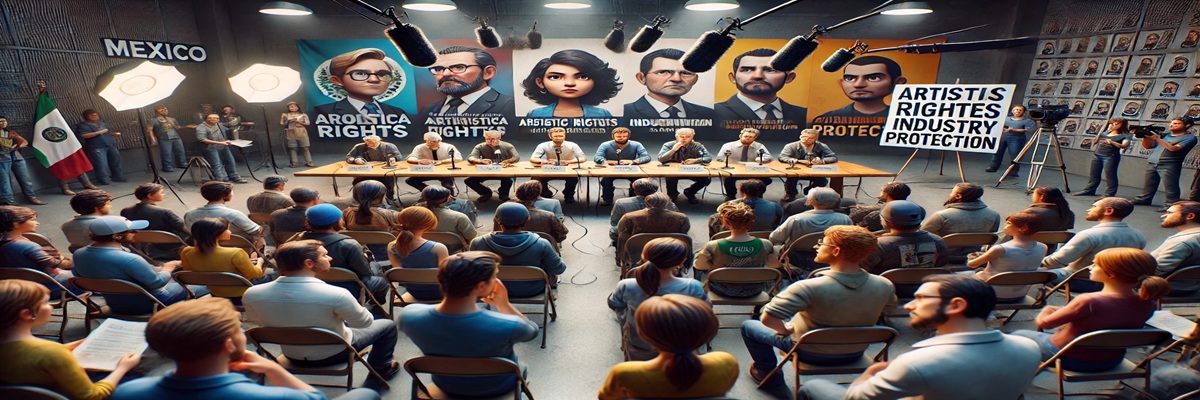
A growing number of professional voice actors in Mexico are speaking out, urging government intervention to protect their rights and working conditions in an industry they say is becoming increasingly exploitative. At the heart of their concern is the unregulated use of synthetic voices, lack of fair pay, and the erosion of traditional voiceover jobs due to outsourcing and new technologies.
This movement recently gained national attention after prominent figures from the Asociación Nacional de Intérpretes (ANDI) and the Asociación Nacional de Actores (ANDA) participated in a public call for legislation. Their demand is clear: Mexico needs enforceable laws that establish working standards for voice actors, protect against unauthorized digital replication, and guarantee professional compensation for work used by streaming platforms and multinational studios.
The situation reflects a broader trend that’s affecting voice talent worldwide, but in Mexico—long regarded as a Latin American dubbing powerhouse—the stakes feel especially high. For decades, Mexican voice actors have been responsible for Spanish-language dubbing across Latin America, giving voice to some of the most iconic characters in animation, cinema, and television. Now, that legacy is at risk.
Voice actors argue that without legal protections, their work is being devalued at a time when content demand is booming. They say that multinational studios and tech companies are increasingly outsourcing Spanish-language dubbing to non-union actors or relying on AI-generated voices that mimic human performance but offer none of the safeguards or compensation for the original talent.
Legacy Undermined: How Mexico Became a Dubbing Hub—and Why It’s Under Threat
Mexico has long held a central role in the Spanish-language voice acting industry. With decades of experience and a deep pool of highly trained talent, the country has dubbed everything from Hollywood blockbusters to anime, animated films, and major streaming releases for global distribution across Latin America. Voices from Mexico have defined entire generations of beloved characters, with performances that match—and often elevate—the original source material.
However, in recent years, actors have reported a noticeable shift. Production companies, in an effort to reduce costs and speed up turnarounds, are opting for non-unionized talent, foreign production facilities, or even synthetic voices, bypassing experienced professionals. What was once a structured, artist-driven craft is increasingly treated as a commodity.
According to members of ANDA and ANDI, these changes are eroding Mexico’s cultural and professional leadership in dubbing. Longtime voice actors now find themselves competing with unregulated workforces or AI-driven tools that don’t follow labor standards. Meanwhile, global demand for dubbed content is surging—yet the compensation and protections for the voices behind that content are stagnating.
Many of Mexico’s most recognizable voice actors have shared their experiences publicly, pointing to cases where streaming platforms reuse dubbed performances across territories without paying additional fees. Others have raised alarms over the unauthorized use of vocal likenesses in training datasets for AI models, with no consent or compensation involved.
This has led to a growing belief within the community that Mexico’s voice actors—despite their legacy and global contributions—are being left behind in a digital shift that favors speed and cost over craft and ethics.
AI Voices and the Threat of Unregulated Replication
One of the most urgent concerns raised by Mexican voice actors is the rise of synthetic voices—AI-generated vocal performances created without the consent of the original talent. As voice cloning and deep-learning tools become more accessible, many in the industry fear that real human actors may be replaced, imitated, or repurposed without compensation or control.
In the current legal landscape, there are no clear regulations in Mexico that prevent companies from using an actor’s recorded voice to train AI models or generate new content. Voice actors argue that this opens the door to unauthorized exploitation—not just of individual voices, but of the cultural voice identity that Mexico’s dubbing industry helped build.
Some actors have already encountered instances where their performances were reused or simulated in other projects without their involvement. Others worry that once a voice is digitized, it can be altered, pitched, or repurposed indefinitely—without any additional pay, credit, or permission. This raises not only economic concerns but also ethical and artistic ones.
Organizations like ANDI have emphasized that a person’s voice is part of their identity and should be protected under image and performance rights. They are now pushing for legislation that would require express consent before a voice can be digitally cloned or reused—something that mirrors discussions already underway in the U.S., Canada, and parts of Europe.
For many actors, the issue isn’t about resisting technology—it’s about establishing boundaries and rights in a rapidly evolving landscape. Without those protections, even top-level professionals risk being sidelined by tools that were trained, in part, using their own work.
Calls for Legislative Action: What Voice Actors Are Demanding
To address these growing concerns, Mexico’s top voice acting unions and advocacy groups are urging lawmakers to introduce clear, enforceable standards for the industry. Their proposed measures include:
- Legal recognition of voice as part of a performer’s identity, protected from unauthorized replication or AI use
- Minimum compensation standards for work distributed on streaming platforms, including international reuse clauses
- Transparent crediting and usage tracking for all dubbed performances, regardless of distribution territory
- Regulations around AI-generated dubbing, including consent protocols and usage limits
- Formal protections for unionized talent, discouraging studios from outsourcing to unregulated or underpaid labor markets
These demands are not without precedent. In the United States, similar concerns have led to union-led negotiations with major studios, especially around the use of AI in animation and video games. SAG-AFTRA has already begun pushing for clauses that limit synthetic voice use without performer approval.
In Mexico, voice actors are calling for comparable protections to safeguard their profession—especially as streaming giants like Netflix, Disney+, and Amazon Prime continue to rely on Spanish-language localization to reach global audiences. The actors’ argument is clear: if their performances are helping platforms thrive across Latin America, their labor deserves legal protection and fair compensation.
This movement is also about preserving artistic quality. Many professionals fear that if the industry shifts too heavily toward automated or non-professional dubbing, the emotional depth and nuance that has made Mexican voice acting so respected could erode. With fewer incentives for training and fewer protections for skilled workers, the future pipeline of talent may weaken over time.
Why This Moment Matters for Voice Actors Worldwide
Although this current movement is centered in Mexico, the concerns it raises reflect a global shift in the voice acting industry—one shaped by rapid technological change, increasing demand for localized content, and inconsistent protections for performers. For decades, Mexican voice actors have been a pillar of international dubbing. Now, they’re sounding the alarm on what happens when an industry built on craft and nuance is reduced to algorithms and outsourcing.
Their fight is not just about wages—it’s about recognition, respect, and authorship. When a voice becomes data, when performance becomes code, who owns the result? And who benefits?
What makes Mexico’s situation especially urgent is that its dubbing industry helped define modern voice localization standards, yet its actors are now among the least protected in a rapidly globalizing market. Without legislative support, voice professionals could lose not just control over their work—but their ability to sustain a career in a field they helped build.
Many in the community hope this public pressure will lead to real reform. If lawmakers respond, Mexico could become a model for how developing nations balance innovation with fair labor practices in creative fields. If not, actors fear a future where voices are taken without credit, replayed without pay, and forgotten in favor of cheaper, synthetic alternatives.
For now, the message from Mexico’s voice acting community is clear:
Protect the voice. Protect the performer. Protect the industry.
